

As Helium's decentralized wireless network thrives on Solana in 2026, running a Helium hotspot on Solana offers a straightforward entry into Solana DePIN mining. With over 400,000 active hotspots spanning 80 countries and processing 576TB of data in Q4 2024 alone, the network's 555% quarter-over-quarter growth underscores its momentum. HNT trades at $0.8144, up and $0.009940 ( and 0.0124%) over the last 24 hours, reflecting steady confidence in this DePIN leader.
This migration to Solana, completed by early 2026, has supercharged scalability, enabling faster hardware scaling and efficient reward distribution through a unified HNT token model. For long-term investors like myself, with 14 years in digital assets, Helium exemplifies how DePIN projects on Solana deliver real-world utility while generating passive income. Hotspots earn HNT by providing coverage for IoT devices and mobile data, verifying proofs-of-coverage on the blockchain. In Q4 2025, partnerships with carriers like T-Mobile and AT and T drove $2.2 million in monthly revenue, pushing cumulative earnings beyond $12 million.
Why Solana Powers the Future of Helium Hotspot Mining
Solana's high throughput and low fees make it ideal for Helium's data-intensive operations, unlike legacy chains bogged down by congestion. This shift eliminates previous bottlenecks, allowing hotspots to submit proofs seamlessly. From my analysis, Solana's ecosystem has positioned Helium as the top DePIN by revenue, outpacing rivals like io. net and GEODNET. Contributors now benefit from streamlined governance and rewards, with hotspots potentially netting $400 monthly in prime locations, split equitably with hosts.
Helium's Solana integration scales physical infrastructure faster, processing massive data volumes without compromise.
Strategic deployments, especially with 5G integration, amplify earnings. Indoor units suit urban apartments, while outdoor models excel in suburban or rural spots with elevated antennas. Selecting the right hardware is crucial for helium solana setup 2026 success.
Essential Hardware for Solana Helium Miner: Indoor vs Outdoor Hotspots Comparison
| Feature | Indoor 🏠 | Outdoor 🌤️ |
|---|---|---|
| 💰 Price | $249 | $499 |
| Supported Carriers | T-Mobile/dual carriers | AT&T networks |
| Ideal Location | Apartments/urban | Roofs/poles/rural |
| Earnings Potential | Moderate | High with elevation |
| Setup Complexity | Easy plug-and-play | Requires grounding & drilling |
| Hotspot Miner | RAK low-power LoRaWAN | RAK low-power LoRaWAN |
| Smartphone | iOS/Android for app | iOS/Android for app |
| Router | Gigabit Ethernet | Gigabit Ethernet |
| 📡 Antenna Kit | 5.8-8dBi + 10 AWG wire | 5.8-8dBi + 10 AWG wire |
Future HNT appreciation could multiply returns; conservative models project steady climbs tied to network expansion.
Helium (HNT) Price Prediction 2027-2032
Forecasts driven by DePIN growth, Solana integration, hotspot expansion, and revenue trends from 2026 baseline of $0.81
| Year | Minimum Price | Average Price | Maximum Price | YoY % Change (Avg) |
|---|---|---|---|---|
| 2027 | $1.20 | $2.00 | $3.50 | +147% |
| 2028 | $1.80 | $3.50 | $6.00 | +75% |
| 2029 | $2.50 | $5.50 | $9.50 | +57% |
| 2030 | $3.50 | $8.00 | $14.00 | +46% |
| 2031 | $5.00 | $11.50 | $20.00 | +44% |
| 2032 | $7.00 | $16.00 | $28.00 | +39% |
Price Prediction Summary
HNT is projected to experience substantial growth through 2032, fueled by Helium's DePIN dominance, Solana migration boosting scalability, and surging hotspot revenues (e.g., $2.2M in Oct 2025). Average prices could rise over 20x from 2026 levels, with min/max reflecting bearish regulatory risks vs. bullish adoption surges. CAGR ~51% on averages, aligned with crypto bull cycles and network metrics like 400k+ hotspots.
Key Factors Affecting Helium Price
- DePIN sector leadership with 555% QoQ data growth (576TB Q4 2024)
- Solana blockchain enhancing efficiency and scalability post-migration
- Hotspot expansion (400k+ active) and revenue trends ($12M+ cumulative early 2025)
- Unified HNT token for rewards/governance streamlining
- 5G integrations and partnerships driving adoption
- Regulatory risks in telecom/crypto and market cycles
- Competition from other DePIN projects and tech advancements
Disclaimer: Cryptocurrency price predictions are speculative and based on current market analysis. Actual prices may vary significantly due to market volatility, regulatory changes, and other factors. Always do your own research before making investment decisions.
Strategic Location Selection and Antenna Optimization
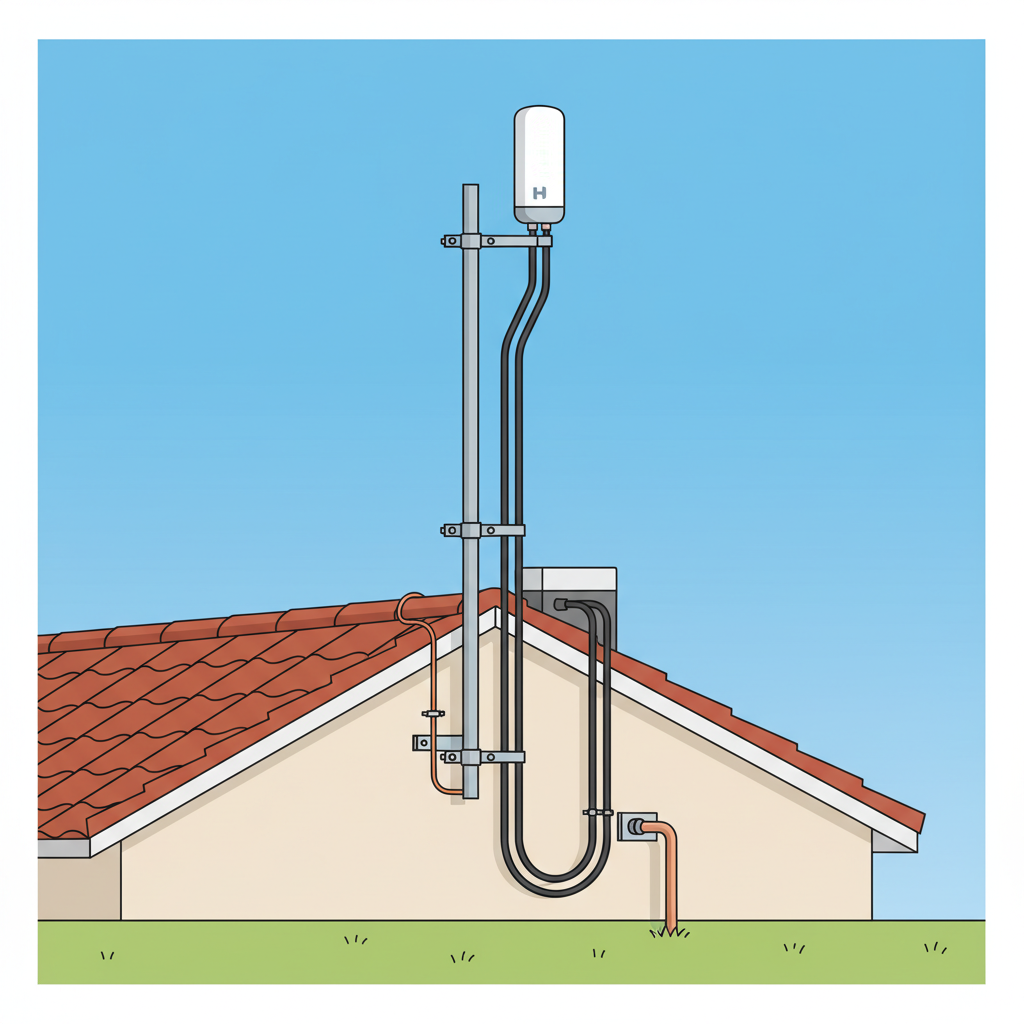
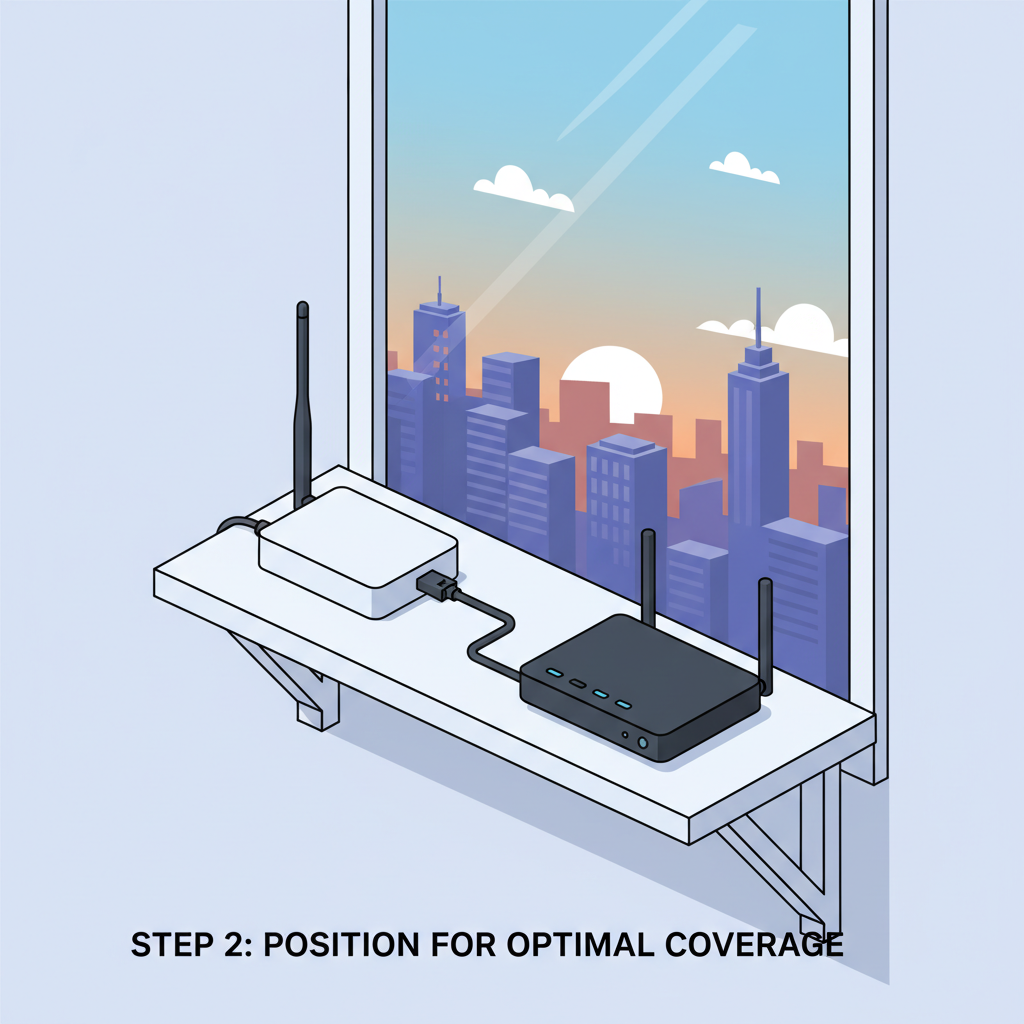
Location dictates 80% of earnings in DePIN hotspot guide scenarios. Aim for high vantage points with minimal obstructions, 300-500m from nearest hotspots via Helium explorer. Urban rooftops yield consistent IoT traffic; rural towers capture mobile data surges. Grounding prevents lightning damage: use blocks and rods per code.
- Scan coverage maps on Helium app.
- Test signal with temporary antenna.
- Secure permissions; revenue-share 50/50 models build trust.
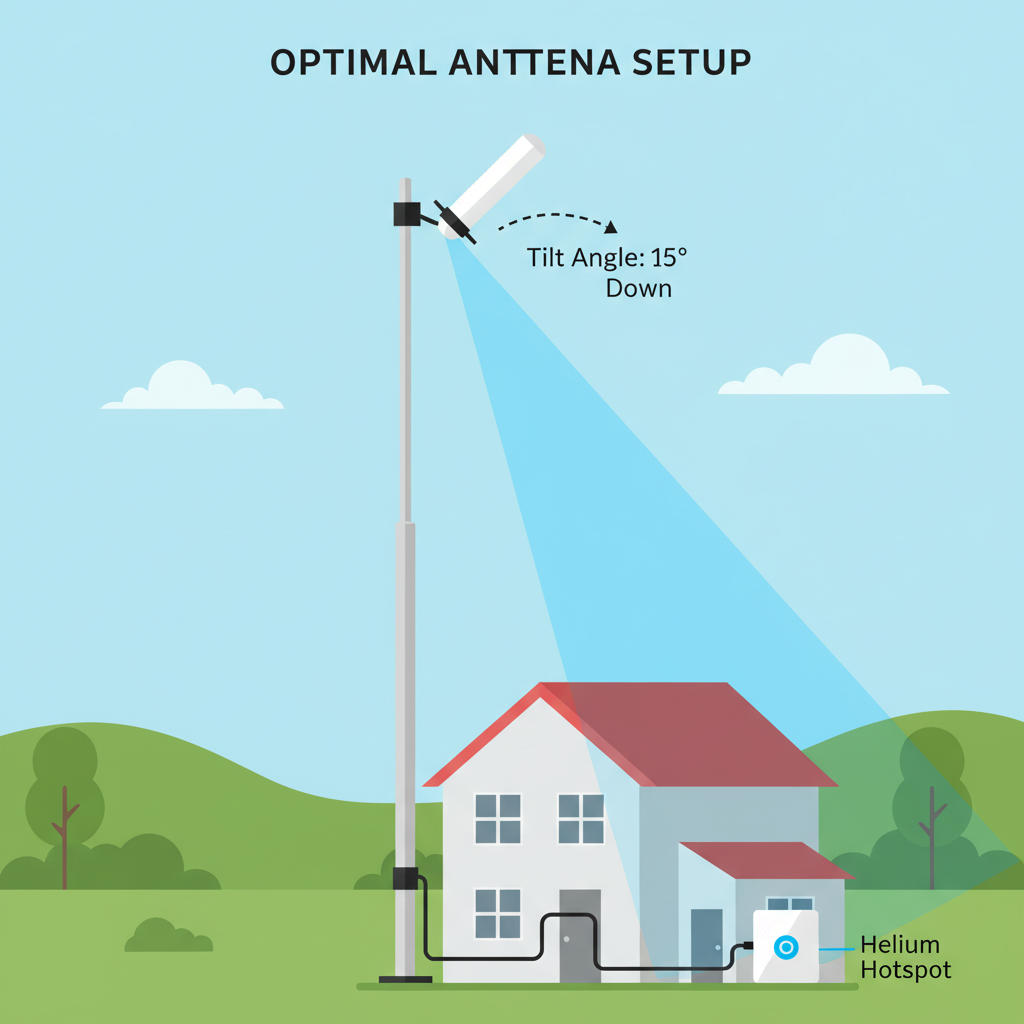
Antenna placement at 10-20ft height, tilted 10 degrees, maximizes relay scale. Post-setup, monitor via dashboard for transmit scale and data credits earned in HNT.
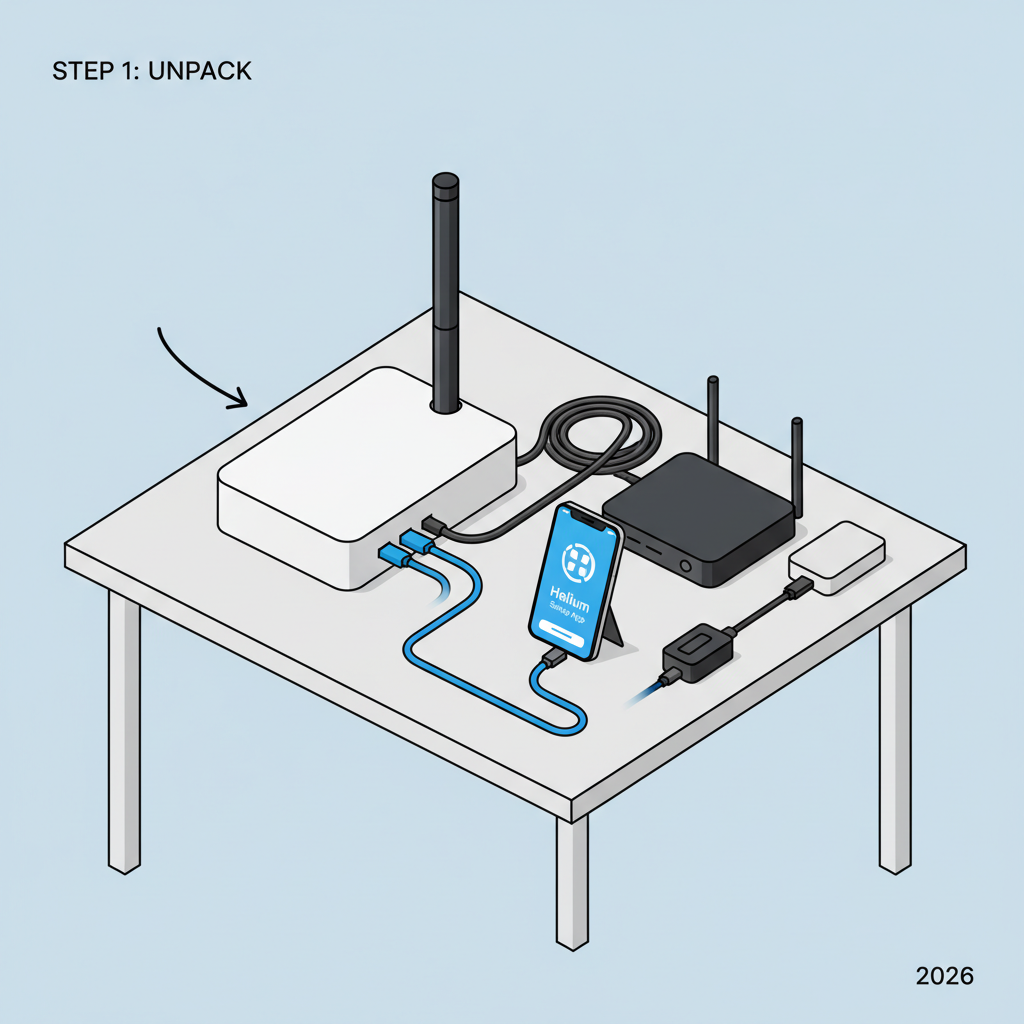
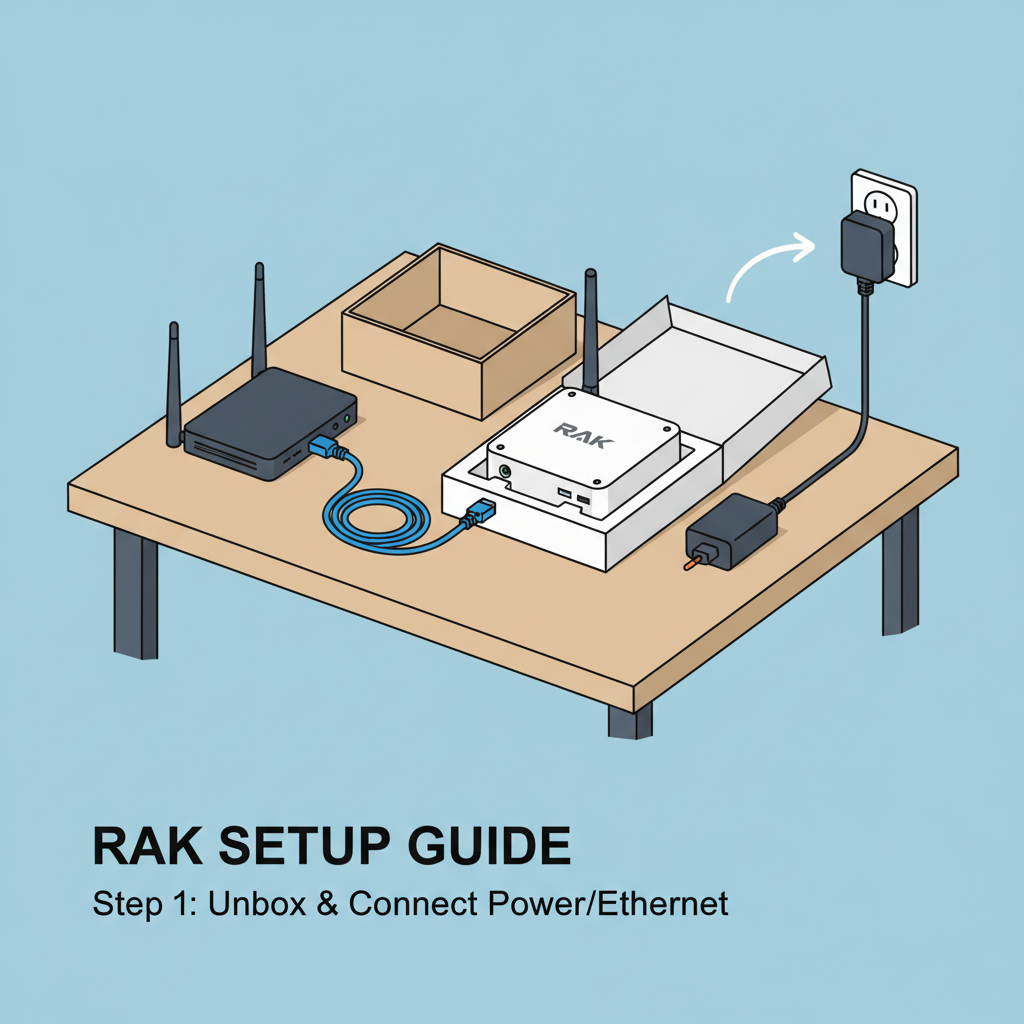
Assembling your Solana helium miner begins with unboxing the hotspot, typically a low-power RAK model priced between $400-$600. Connect the Ethernet cable to your gigabit router, power via USB-C, and attach the antenna securely. For outdoor units, drill mounts and integrate 10 AWG grounding wire to a rod, complying with local codes. Indoor setups plug-and-play in minutes, ideal for apartments chasing moderate earnings.
Firmware Flashing and Solana Network Onboarding
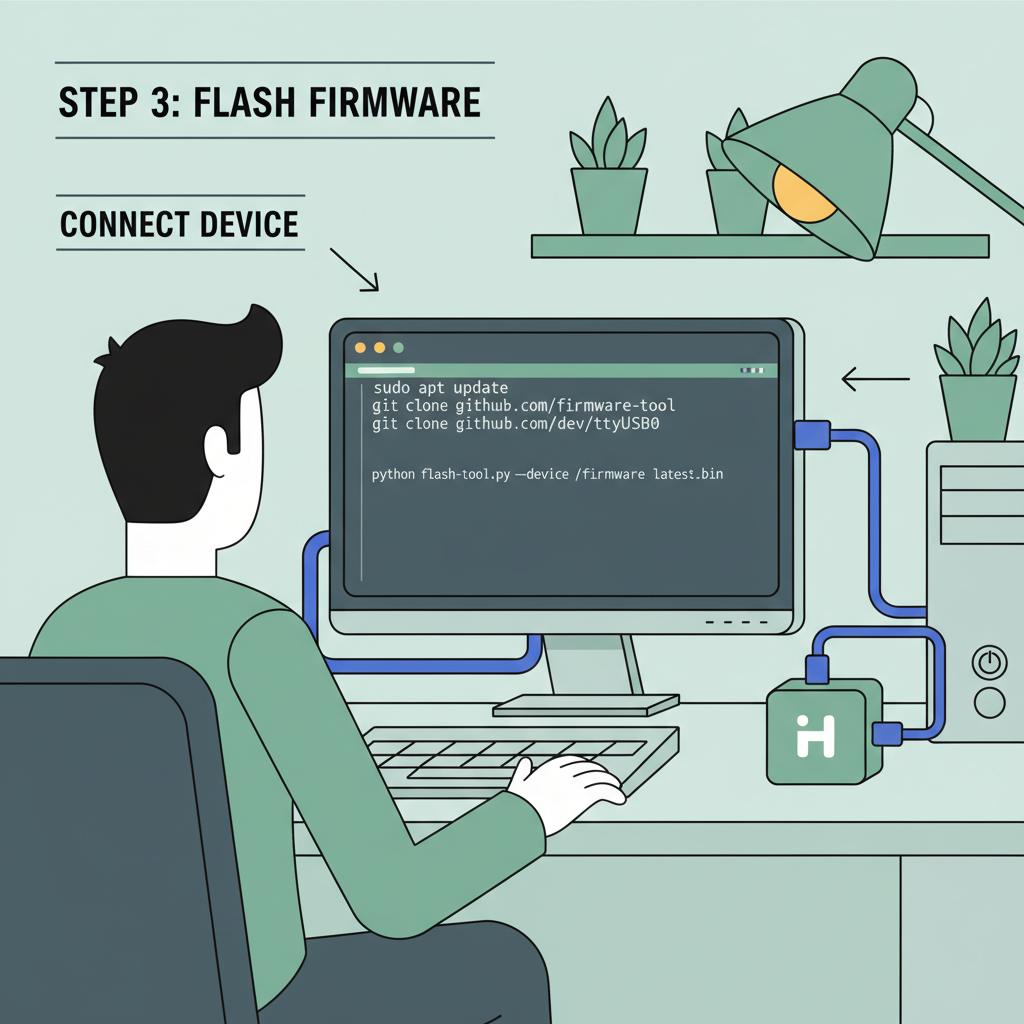
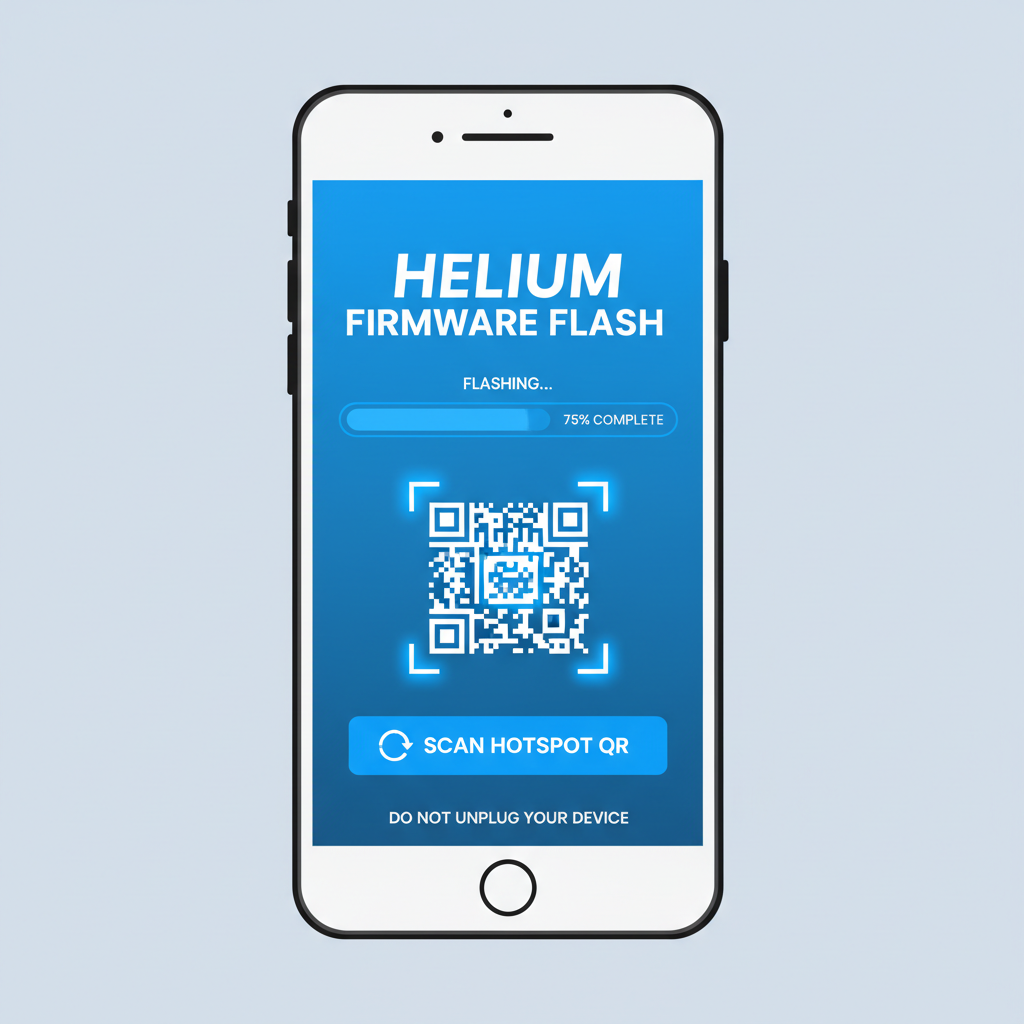
Flash the latest firmware via the Helium app on your smartphone, ensuring Solana compatibility post-2026 migration. This step validates your gateway for data-only or mobile operations, submitting proofs-of-coverage directly to Solana validators. Onboarding confirms location via GPS and pairs with the blockchain, unlocking HNT rewards at $0.8144 per token.
Expect 15-30 minutes for syncing; dashboard reflects transmit scale immediately. Dual-carrier indoor hotspots favor T-Mobile density, while AT and T outdoor excels in coverage voids.
2026 Helium Hotspot: Firmware Flash, Solana Onboarding & Antenna Mastery

Detailed Setup Process for Optimal Performance
Precise execution separates profitable miners from underperformers in solana depin mining. Power cycles resolve 90% of initial glitches; persistent issues trace to Ethernet stability over WiFi.
2026 Helium Solana Hotspot Setup: Complete DePIN Miner Guide


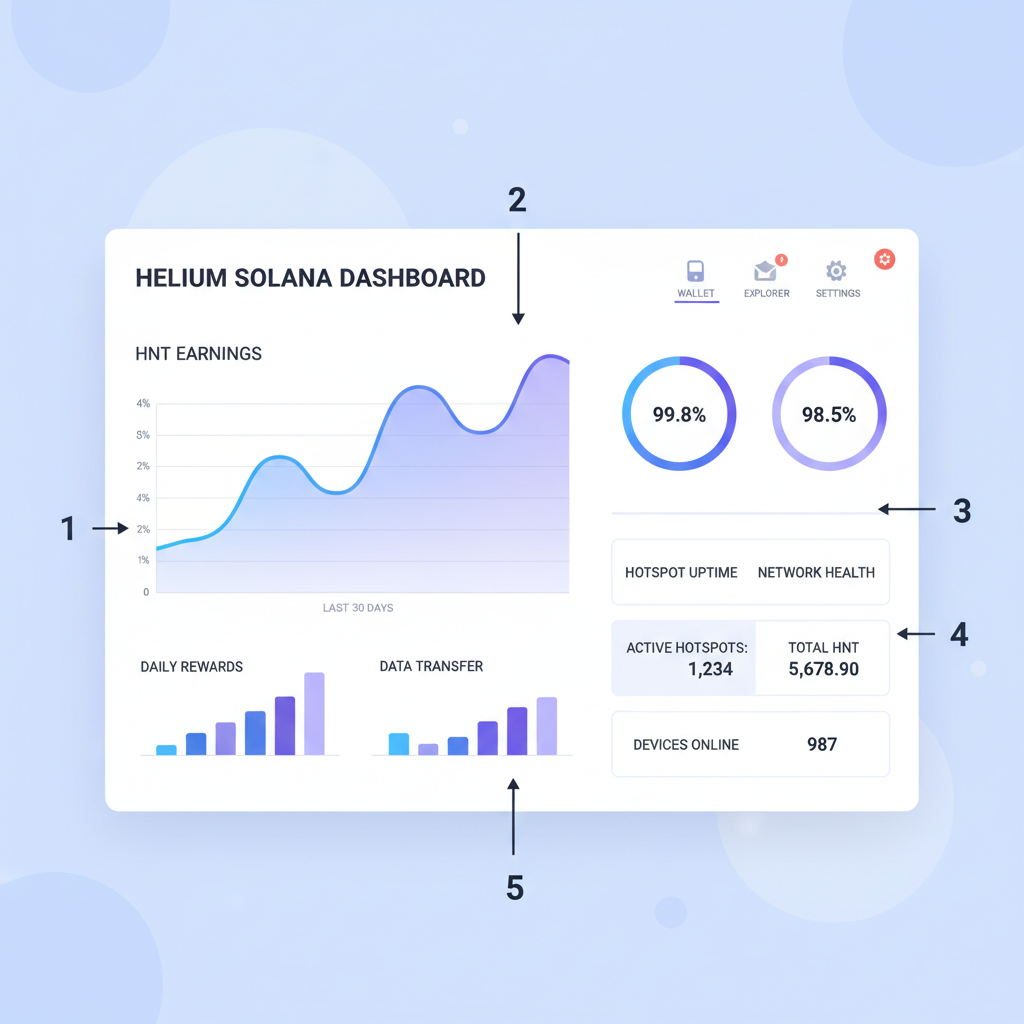
Post-onboarding, calibrate via app diagnostics, targeting 4-8 relays daily. Earnings accrue in HNT, convertible via exchanges, with prime spots yielding $400 monthly before splits.
Monitoring Earnings and Long-Term Optimization
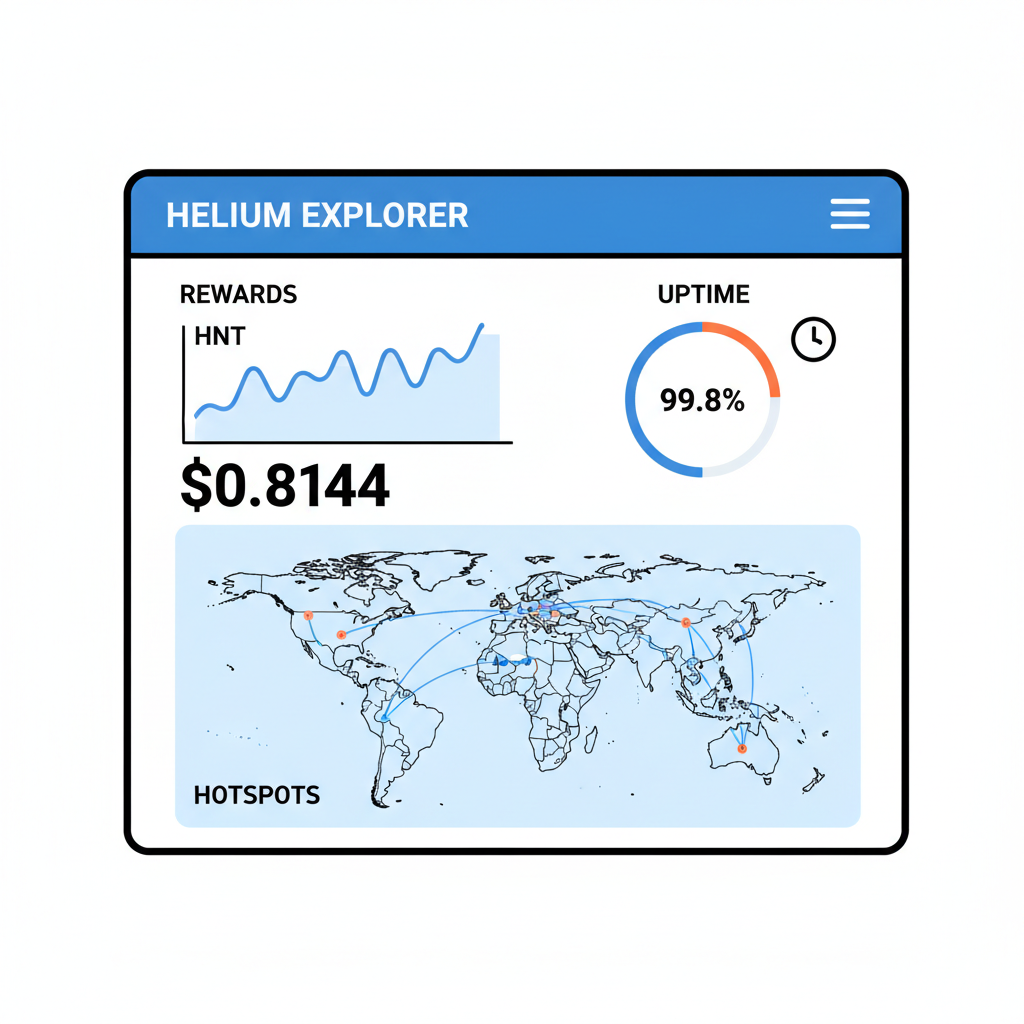
Helium's explorer dashboard tracks transmit scale, data credits, and HNT balance in real-time. At current $0.8144 pricing, 24-hour highs of $0.8593 and lows of $0.7999 highlight volatility; stake conservatively. Upgrade antennas quarterly for 20-30% boosts, and rotate locations seasonally for traffic peaks.
- Weekly: Review relay count; below 5 signals repositioning.
- Monthly: Audit grounding; lightning claims void warranties.
- Quarterly: Firmware updates ensure Solana sync.
From my 14-year vantage, Helium's 576TB quarterly data surge on Solana signals multi-year compounding. Partnerships fuel adoption, with 400,000 hotspots proving network resilience. Patient operators, sharing equitably, build sustainable income streams amid DePIN's ascent.
Solana's efficiency turns physical hotspots into scalable assets, rewarding diligence over speculation.
Common pitfalls like overcrowding erode gains; always verify spacing. As coverage blankets nations, early movers on this helium solana setup 2026 capture outsized shares, blending utility with appreciation potential.





No comments yet. Be the first to share your thoughts!