
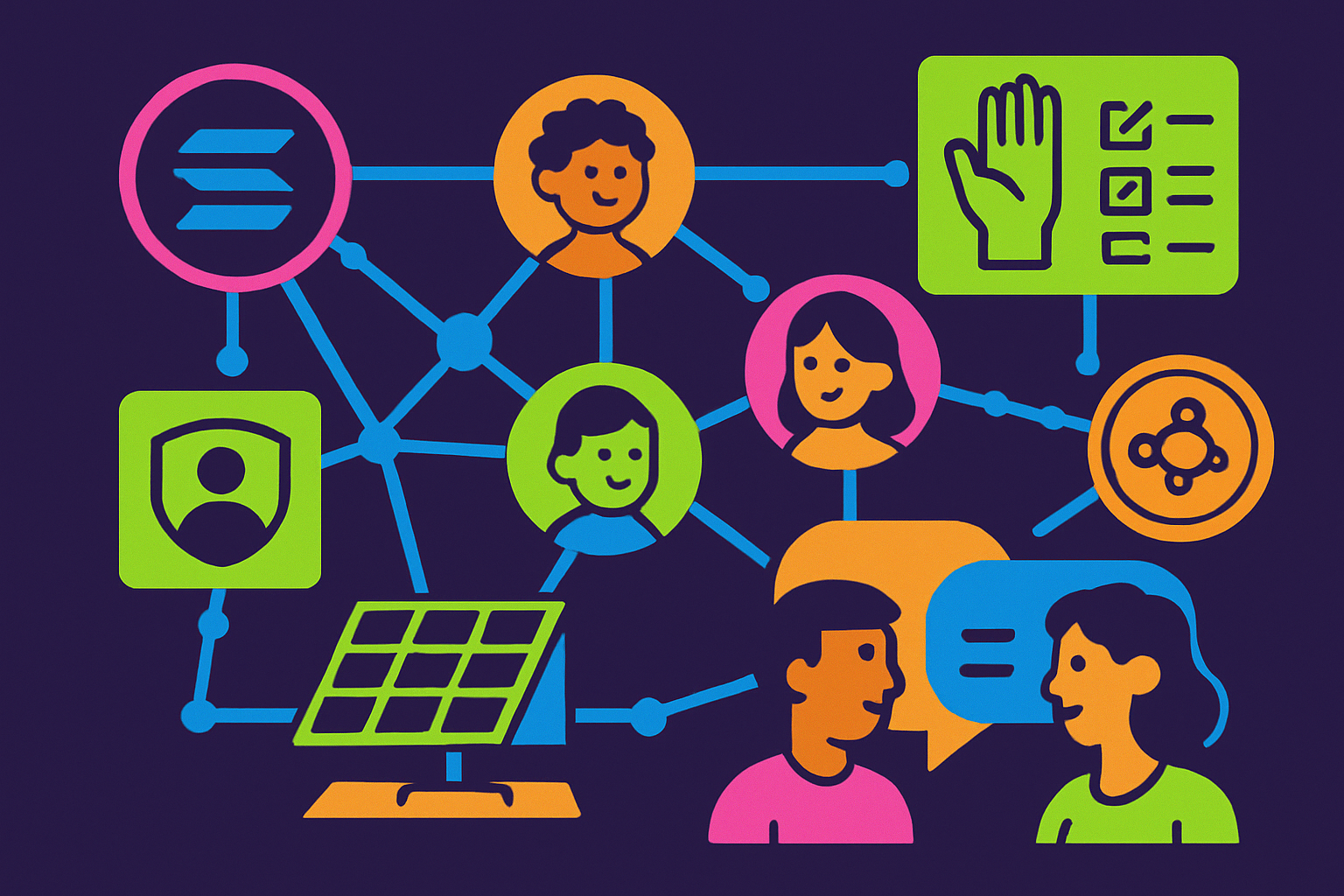
Decentralized Physical Infrastructure Networks (DePIN) are rapidly reshaping how society builds, maintains, and monetizes real-world infrastructure. By leveraging blockchain technology, DePINs empower individuals and communities to participate directly in the deployment of vital services, ranging from wireless networks to distributed computing, sidestepping the inefficiencies and high costs of traditional, centralized models. At the heart of this revolution is Solana, a blockchain purpose-built for scale, speed, and cost-efficiency.
What Makes Solana the Backbone of DePIN?
Solana’s technical architecture addresses the critical bottlenecks that have historically limited decentralized infrastructure projects. With its high throughput (up to 65,000 transactions per second) and ultra-low fees (averaging $0.00025 per transaction), Solana enables micro-transactions at scale, a foundational requirement for DePIN models where thousands or millions of devices must coordinate seamlessly in real time.
This performance edge has made Solana the default choice for many DePIN initiatives. The network’s robust developer ecosystem, mature tooling, and broad liquidity access further accelerate project launches and user onboarding. As a result, innovators can focus on building disruptive solutions without being hamstrung by technical or economic constraints.
“Solana’s combination of speed and affordability is not just a technical advantage, it’s what makes decentralized infrastructure viable for mainstream use. ”
The Economic Case: Real-Time Market Data and DePIN Growth
The current price of Binance-Peg SOL (SOL) sits at $161.56, reflecting both renewed investor confidence and Solana’s growing dominance in the DePIN sector. Over the past 24 hours alone, SOL has climbed by $8.56 ( and 0.0560%), with trading ranges between $147.60 and $163.78, underscoring heightened activity as new infrastructure projects come online.
The market capitalization of Solana-based DePIN projects now exceeds $25 billion, with 78 active projects spanning wireless networks, cloud storage, geolocation services, GPU rendering, and more as of March 2025. This surge is not merely speculative; it reflects tangible adoption as users around the globe earn rewards for contributing hardware resources or bandwidth to decentralized networks.
Pioneering Projects: How Solana Powers Real-World Infrastructure
The diversity of use cases emerging on Solana is remarkable:
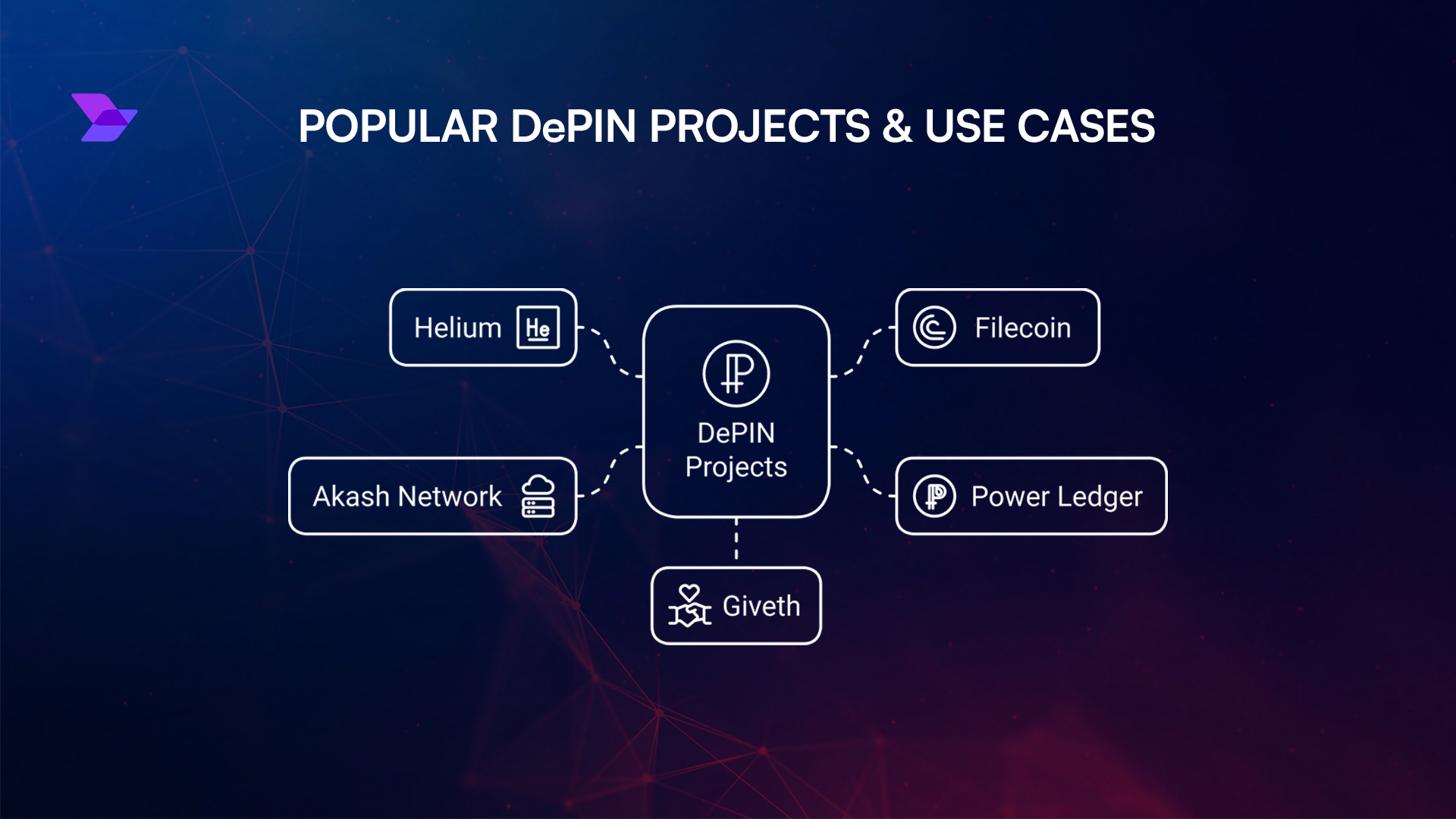
- Helium: After migrating to Solana, Helium deployed nearly one million hotspots across 192 countries, providing IoT connectivity and expanding into 5G mobile coverage.
- Render Network: Harnesses idle GPU power worldwide for distributed rendering tasks at a fraction of centralized costs.
- Hivemapper: Incentivizes drivers to collect street-level imagery, creating a decentralized map that now covers roughly 30% of global roads.
- Grass: Allows millions to earn rewards by sharing unused internet bandwidth through a secure protocol.
- Geodnet: Delivers precise navigation data for autonomous vehicles, drones, robots, and metaverse applications through its decentralized sensor network.
This breadth demonstrates how Solana’s infrastructure is not just theoretical, it is actively transforming physical systems worldwide. For a deeper dive into specific deployments across energy grids, Wi-Fi networks, EV charging stations, and beyond, see our comprehensive project spotlights in Solana-powered DePIN Projects: Real-World Examples Transforming Infrastructure.
The Mechanics: Why Decentralization Matters in Physical Networks
The core innovation behind DePINs on Solana lies in their ability to democratize access to essential services while reducing costs for end users. By rewarding individuals who contribute resources, whether it’s bandwidth via Grass or mapping data via Hivemapper, these networks become more resilient than legacy alternatives controlled by single entities.
This participatory model also unlocks new forms of capital formation; token incentives align interests across users globally while providing transparent governance mechanisms that can adapt rapidly to changing needs or threats.
Crucially, Solana’s high throughput and negligible fees make it possible for these micro-incentives to be distributed in real time, ensuring that contributors are continuously rewarded for their participation. This stands in contrast to traditional infrastructure models, where centralized intermediaries often capture the majority of value and innovation is stifled by bureaucratic inertia.
For developers and entrepreneurs, Solana offers a fertile ground for experimentation. The network's composability allows DePIN projects to integrate with DeFi protocols or NFT marketplaces, creating new monetization models and utility layers. As a result, we’re witnessing a new wave of hybrid applications that blur the lines between digital and physical infrastructure.
Challenges Ahead: Scaling Decentralized Infrastructure Responsibly
Despite its momentum, the path forward for DePIN on Solana is not without obstacles. Regulatory uncertainty remains a key concern as these networks intersect with established industries like telecommunications and energy. Ensuring security at scale is also critical; as more physical assets become tokenized and connected via blockchain, robust safeguards against malicious actors are essential.
Additionally, mainstream adoption will require ongoing improvements in user experience. Many DePIN solutions still require technical know-how or specialized hardware. Lowering these barriers, through intuitive wallets, seamless onboarding flows, and educational initiatives, will be vital to unlocking broader participation. For builders seeking actionable strategies on this front, our resource Building Accessible DePIN: Lowering the Barrier for Non-Technical Users on Solana provides practical guidance.
Looking Forward: The Future of Solana DePIN
The next phase of growth for Decentralized Physical Infrastructure Networks on Solana will likely be defined by cross-sector collaboration and real-world impact metrics. Projects that can demonstrate measurable improvements, such as lower connectivity costs in underserved regions or reduced environmental footprint from distributed compute, will set the standard for what’s possible when blockchain meets physical infrastructure.
With SOL trading at $161.56, investor sentiment remains strong as institutional capital begins to flow into the sector. The convergence of high-performance blockchain technology with tangible utility is attracting both technologists and traditional infrastructure players eager to tap into decentralized value creation.
The evolution of DePIN on Solana exemplifies a broader shift toward permissionless innovation in critical industries. As more projects launch and existing networks mature, expect to see an expanding array of services, from EV charging stations to decentralized cloud storage, all underpinned by the same principles: transparency, efficiency, and community ownership.
For those tracking market trends or considering building in this space, staying informed about technical breakthroughs and ecosystem best practices is crucial. Explore our technical deep dives at How Solana Powers Decentralized Physical Infrastructure Networks: A Technical Deep Dive for a closer look at protocol-level innovations driving this movement.





No comments yet. Be the first to share your thoughts!