
Why Solana fits agent workflows
Building autonomous agents requires infrastructure that can handle high-frequency, low-value interactions without breaking the bank. Solana provides the throughput and cost efficiency necessary for these workflows, allowing AI agents to execute microtransactions and interact with on-chain programs in real time.
The network’s high speed and minimal fees make it ideal for agents that need to trigger actions based on external data or user inputs. Unlike networks with high gas costs, Solana enables agents to perform thousands of operations—such as updating state, transferring tokens, or calling smart contracts—without the transaction costs outweighing the value of the action.
This economic model supports the emerging ecosystem of Solana AI agents, which are autonomous programs capable of interacting with the blockchain using natural language processing and machine learning. The Solana Foundation reports that the network has already processed over 15 million on-chain agent payments, with stablecoins emerging as the default medium for these transactions.
For developers, this means the underlying infrastructure is proven and scalable. Whether you are building a Breeze Agent Kit integration or a custom Helius-powered workflow, Solana’s architecture ensures that your agent can operate efficiently at scale.
Secure wallet architecture for autonomous agents
Solana AI agents operate in a trust-minimized environment where the private key is the single point of failure. If an agent holds full custody of its wallet, a compromised model or prompt injection can drain funds instantly. The solution is to decouple the decision-making layer from the execution layer using policy-controlled key management.
Instead of storing private keys in the agent's local environment or a standard JSON-RPC provider, developers should use a hardware-backed custody solution like Turnkey. This approach allows the AI to request transactions, but a human or a predefined policy must approve the cryptographic signing. This ensures that the agent can execute complex workflows without ever possessing the raw private key.
Step 1: Initialize a policy-controlled wallet
The foundation of a secure Solana AI agent is a wallet structure that enforces strict execution rules. Tools like the Breeze Agent Kit demonstrate this by integrating with Turnkey to manage yield farming strategies. Rather than hardcoding keys, the agent interacts with a policy engine that defines what transactions are permissible.
The policy engine acts as a gatekeeper. It evaluates the transaction data against a set of predefined rules before allowing the signature to proceed. This prevents the agent from sending funds to unauthorized addresses or executing unintended swaps, even if the underlying AI model generates a malicious instruction.
import { TurnkeyClient } from '@turnkey/http';

// Initialize the Turnkey client with secure credentials
const client = new TurnkeyClient(apiOptions, signers);

// Define a policy that restricts transaction types
const policy = {
  type: 'transaction_policy',
  rules: [
    {
      action: 'sign_transaction',
      conditions: {
        maxAmount: '1.0', // Limit SOL per transaction
        allowedPrograms: ['TokenSwapProgram', 'StakeProgram']
      }
    }
  ]
};

// Apply policy to the agent's wallet context
await client.createWallet({ policy });
Step 2: Implement transaction validation
Before any transaction is sent to the Solana network, it must pass through a validation layer. This step ensures that the agent's output aligns with the security policy. The agent generates a transaction request, but the execution layer verifies the parameters against the policy rules defined in the previous step.
This validation process is critical for preventing drift. As AI models evolve, their output patterns may change. The policy layer remains static and rigid, providing a consistent safety net. If the agent attempts to send more SOL than the allowed limit or interact with an unapproved program, the transaction is rejected before it reaches the blockchain.
Step 3: Execute with human-in-the-loop approval
For high-value operations, a human-in-the-loop (HITL) approval process adds an extra layer of security. The agent prepares the transaction and submits it to the Turnkey API, which then triggers a notification to a designated human operator. The operator reviews the transaction details and signs it using a secure hardware key.
This hybrid approach balances autonomy with safety. The agent handles the bulk of the work, such as monitoring market conditions and constructing complex transaction payloads. However, the final execution requires human verification for significant actions. This model is particularly effective for agents managing DeFi positions or large treasury allocations.
- Audit logs: All transaction requests and approvals are logged on-chain or in a secure database for transparency.
- Rate limiting: Enforce daily or hourly transaction limits to prevent rapid fund drainage in case of a breach.
- Emergency stop: Implement a kill switch that allows the human operator to freeze the agent's wallet in case of detected anomalies.
Step 4: Monitor and update security policies
Security is not a one-time setup but an ongoing process. As the agent's capabilities expand, the security policies must be updated to reflect new risks. Regular audits of the agent's behavior and transaction history help identify potential vulnerabilities.
Developers should also stay informed about new Solana-specific threats and AI security best practices. By continuously refining the policy engine and monitoring the agent's performance, you can maintain a robust security posture that protects both the agent and its users.
- Regular audits: Schedule quarterly reviews of the agent's transaction history and policy effectiveness.
- Threat modeling: Update threat models as new AI capabilities or Solana features are introduced.
- Community feedback: Engage with the Solana AI community to share insights and learn from others' security implementations.
Connecting LLMs to On-Chain Data
To build effective Solana AI agents, you must bridge the gap between natural language reasoning and blockchain execution. An LLM can interpret intent, but it needs real-time context—such as token prices, liquidity pool depths, and recent transaction history—to make informed decisions. Without this data, an agent is guessing in the dark.
Fetching Real-Time Market Data
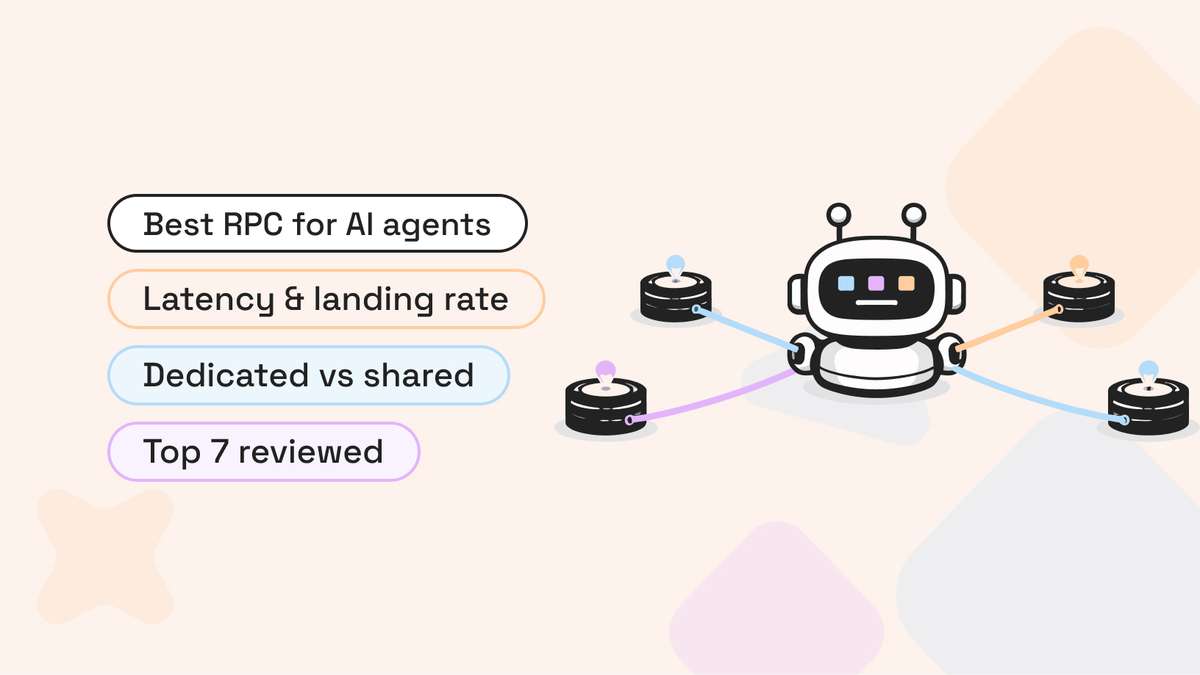
The first step is integrating a reliable data source. Standard Solana RPC nodes provide basic account data, but they often lack the pre-aggregated metrics agents need for quick reasoning. Using a specialized indexer like Helius or a market data API like Geckoterminal allows your agent to query complex states efficiently.
For example, before executing a trade, an agent might query a DexScreener or Birdeye API to check the current price of a token against its 24-hour volume. This external data is passed into the LLM’s context window, allowing the model to evaluate whether a price movement is significant or anomalous.
Executing Trades and Transfers
Once the LLM has processed the data and decided on an action, it outputs a structured command (usually JSON) specifying the transaction details. Your backend code then parses this output, constructs the Solana transaction using libraries like @solana/web3.js, and signs it with the agent’s private key.
Tools like the Breeze Agent Kit simplify this workflow by providing pre-built functions for common DeFi operations. Instead of writing raw transaction builders for every swap, your agent can call a standardized swap function. This reduces the attack surface and ensures that the transaction structure matches Solana’s program requirements, preventing common execution failures.
Ensuring Data Reliability
The reliability of your agent depends entirely on the accuracy of the data it receives. If an oracle or API feed is delayed or incorrect, the LLM may execute a trade at a bad price or miss a critical opportunity. Always implement fallback mechanisms and validate data timestamps before feeding them to the model. This layer of verification is what separates a functional demo from a production-ready autonomous agent.
Deploy your Solana AI agent
Moving your agent from local testing to mainnet requires careful handling of keys and RPC endpoints. The goal is to ensure the agent can sign transactions securely without exposing private keys to unauthorized access. We will use the Breeze Agent Kit structure as a reference for managing these interactions, ensuring the agent operates within defined policy constraints.

Initialize your project directory and install the necessary Solana Web3.js libraries. Configure your local environment variables to store the RPC endpoint URL and the agent’s wallet keypair. This step ensures your codebase has the required dependencies to interact with the Solana blockchain locally.
Instead of storing raw private keys in your code, integrate a policy-controlled wallet solution like Turnkey. This allows your AI agent to request signatures for specific transactions while preventing unauthorized access. Define clear policies for what actions the agent is permitted to perform, such as token transfers or smart contract interactions.
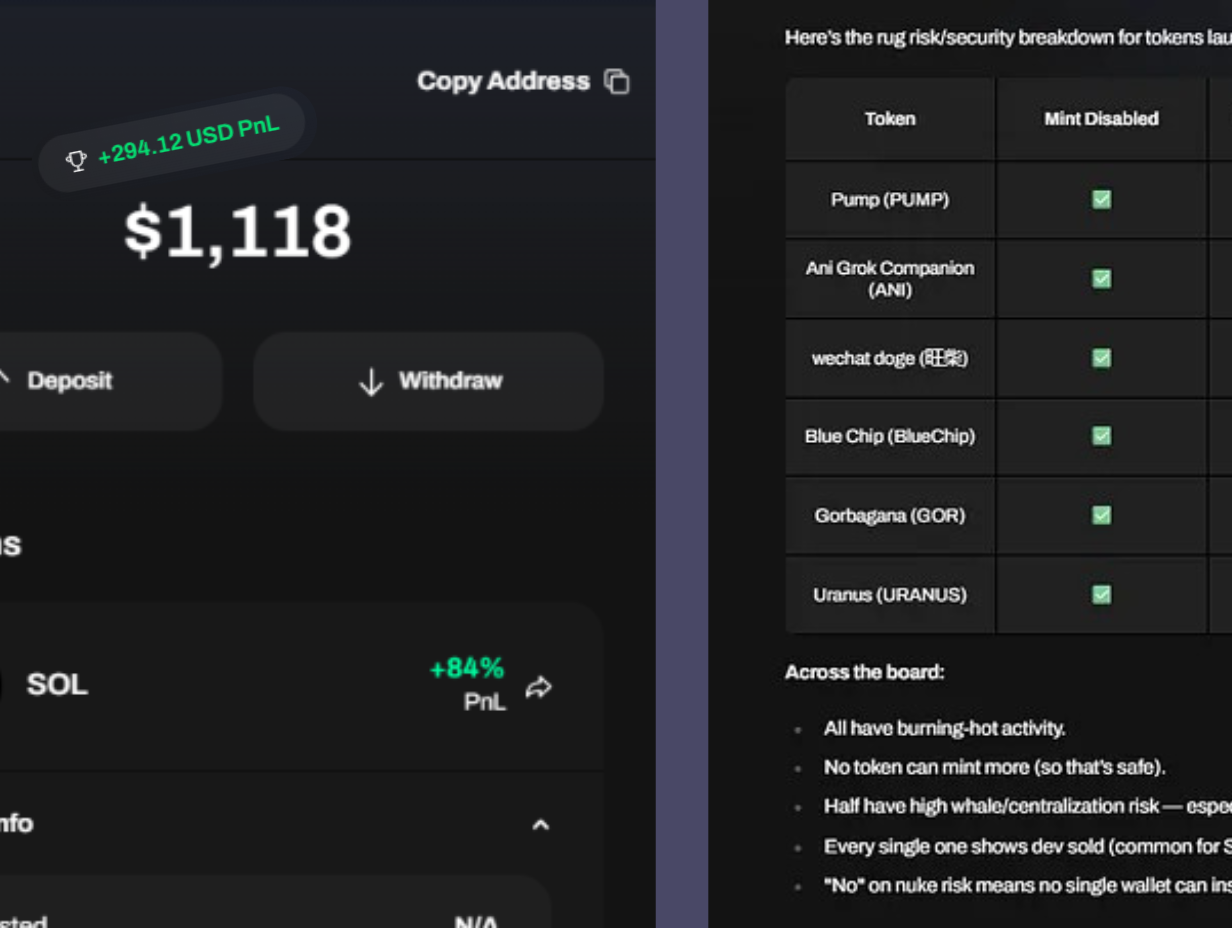
Connect your agent to the Solana devnet to simulate real-world conditions without risking actual value. Use faucet tools to obtain test SOL and execute your agent’s core functions. Verify that the agent correctly interprets market data, generates transactions, and signs them using your configured wallet policies.
Once devnet testing is successful, switch your RPC endpoint to a mainnet provider like Helius. Enable transaction monitoring to track the agent’s performance and detect any anomalies. Start with small transaction volumes to ensure stability before scaling up the agent’s operational capacity.
Common pitfalls in agent design
Building autonomous agents on Solana introduces unique risks that standard web3 applications do not face. When an AI model executes transactions directly on-chain, the margin for error shrinks significantly. A single hallucination or logic loop can drain funds or lock assets permanently. Developers must prioritize safety controls over raw autonomy.
The most frequent failure mode is the infinite loop. Agents may enter a state where they repeatedly attempt to execute a failed transaction or check a condition that never resolves. This not only wastes SOL in rent and compute units but can also trigger rate limits on RPC providers. Implementing strict iteration caps and circuit breakers is essential to prevent runaway processes.
Slippage tolerance is another critical vulnerability. AI models often lack real-time market awareness, meaning they may submit transactions with outdated price expectations. If the slippage setting is too wide, the agent might execute a trade at a severely unfavorable rate. Conversely, setting it too narrow causes constant transaction failures. Use dynamic slippage calculations based on current volatility metrics rather than static values.
Finally, private key exposure remains the most dangerous risk. Never store private keys in environment variables that are part of the LLM’s context window. If the model generates code or logs that include these keys, they become public. Use hardware security modules or dedicated signing services that keep keys isolated from the AI’s processing environment.

No comments yet. Be the first to share your thoughts!