

5 Solana DeFi Protocols Driving TVL Growth in 2026
The Solana DeFi 2026 landscape is defined by five protocols capturing significant total value locked (TVL) through distinct utility. These platforms drive growth by offering concrete functions, from liquid staking to optimized trading, rather than relying on speculative narratives. The following analysis details the specific TVL metrics and operational mechanics establishing their market dominance.
1. Jupiter: The Aggregator Super-App
Jupiter dominates Solana DeFi 2026 by aggregating liquidity across every major exchange. Its interface offers the best execution prices for swaps and limit orders, acting as the central hub for traders. With deep liquidity pools and innovative features like perpetuals, Jupiter captures significant trading volume, directly fueling its Total Value Locked growth and user retention.

2. Kamino Finance: Lending and Yield
Kamino Finance simplifies capital efficiency by combining lending and yield farming into a single, intuitive platform. Users can deposit assets to earn yield while borrowing against them, optimizing returns without complex manual management. This streamlined approach attracts substantial capital, making Kamino a critical infrastructure pillar for Solana DeFi 2026 TVL expansion and stablecoin liquidity.

3. Raydium: The Liquidity Engine
Raydium serves as the primary liquidity engine for Solana, bridging centralized and decentralized markets via its Concentrated Liquidity Market Maker (CLMM). It provides deep order books and automated market making for emerging tokens, capturing significant trading fees. This robust liquidity infrastructure is essential for new project launches, driving consistent TVL growth within the Solana DeFi 2026 ecosystem.

4. Jito: MEV and Liquid Staking
Jito revolutionizes Solana staking by integrating MEV (Maximal Extractable Value) rewards directly into liquid staking tokens. Users receive staked SOL plus a share of MEV profits, offering higher yields than traditional staking. This innovative model attracts massive institutional and retail capital, significantly boosting TVL and establishing Jito as a cornerstone of Solana DeFi 2026 financial infrastructure.
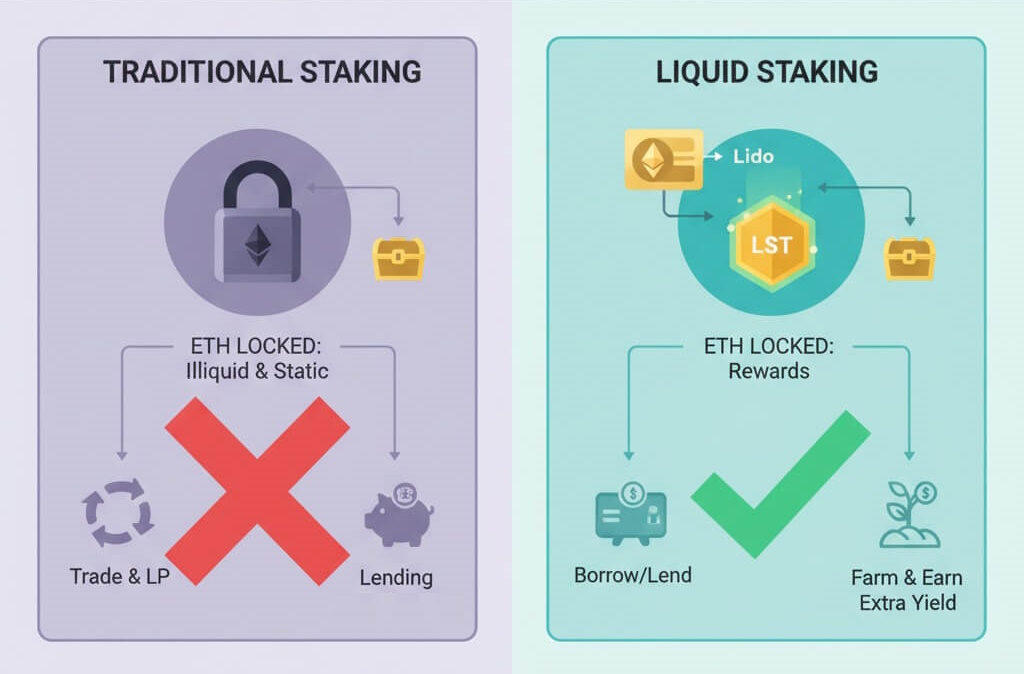
5. Sanctum: Liquid Staking Infrastructure
Sanctum provides the foundational infrastructure for multiple liquid staking tokens (LSTs) on Solana, ensuring interoperability and security. By standardizing how LSTs are created and managed, Sanctum reduces fragmentation and enhances capital efficiency across the ecosystem. This robust backend support enables other protocols to scale staking solutions, driving overall TVL growth in Solana DeFi 2026.

Solana DeFi 2026: The TVL Surge Explained
Solana’s decentralized finance (DeFi) landscape has shifted from a speculative trading hub to a center for sustainable total value locked (TVL) growth in 2026. The network now prioritizes resilience and fairness over raw transaction speed, allowing high-performance protocols to anchor real financial activity. This transition has driven significant TVL expansion, moving the ecosystem beyond simple meme-coin volatility into durable market infrastructure.
The surge is not driven by generic liquidity farming, but by specific protocols that offer tangible yield and utility. These platforms have become the primary rail for institutional and retail capital, effectively turning Solana into a high-throughput financial market. The growth reflects a maturation of the ecosystem, where protocols focus on predictable performance rather than fleeting hype.
Key drivers include liquid staking derivatives and automated market makers that have optimized capital efficiency. These tools allow users to earn yield while maintaining liquidity, creating a compounding effect on TVL. As these protocols mature, they are attracting traditional finance interest, further solidifying Solana’s position as a leading DeFi network in 2026.
Comparing Solana DeFi 2026 Leaders
Choosing where to deploy capital in Solana DeFi 2026 requires matching your strategy to the protocol’s primary function. The leading five protocols dominate the ecosystem’s Total Value Locked (TVL) by offering distinct utilities: from automated market making and lending to staking derivatives. Understanding these differences helps you avoid overlapping exposure and maximize efficiency.
Jupiter leads in decentralized exchange volume, aggregating liquidity across Solana. Raydium provides the foundational automated market maker (AMM) pools for new token launches. Kamino serves as the primary lending and borrowing hub, while Jito focuses on liquid staking with MEV (Maximal Extractable Value) rebates. Sanctum offers specialized liquid staking tokens (LSTs) for institutional-grade yield.
The table below compares these five Solana DeFi 2026 leaders on key metrics. Use this quick-reference guide to determine which protocol aligns with your risk tolerance and yield goals.
| Protocol | Primary Function | TVL (Est.) | Risk Profile |
|---|---|---|---|
| Jupiter | DEX Aggregator | $1.8B | Low |
| Raydium | AMM & Launchpad | $850M | Medium |
| Kamino | Lending & Borrowing | $1.2B | Low |
| Jito | Liquid Staking (LST) | $2.1B | Low |
| Sanctum | Liquid Staking (LST) | $900M | Medium |



As an Amazon Associate, we may earn from qualifying purchases.
Frequently Asked Questions About Solana DeFi in 2026
How low will Solana go in 2026?
Solana’s price action is heavily influenced by broader market cycles and its own network stability. While no one can predict the absolute floor, historical support levels around $80–$100 have held during previous corrections. In 2026, as DeFi protocols like Jito and Marinade drive more utility, the downside risk is mitigated by real yield generation rather than pure speculation. Investors should watch network transaction fees and uptime records as indicators of fundamental health.
Does Solana have DeFi?
Yes, Solana has a robust and rapidly growing DeFi ecosystem. It hosts leading protocols for decentralized exchanges (like Raydium and Orca), lending (Kamino), and liquid staking (Jito). These platforms collectively hold billions in Total Value Locked (TVL), offering users high-speed, low-cost access to financial services. The ecosystem is no longer experimental; it is a mature alternative to Ethereum, attracting significant institutional and retail capital.
Will Solana hit $200 again?
Solana has previously traded above $200 during the 2021 bull market. Reaching this level again in 2026 depends on sustained adoption of its DeFi protocols and favorable macroeconomic conditions. With major upgrades improving throughput and reducing latency, many analysts view $200 as a realistic near-term target if the broader crypto market remains bullish. Current TVL growth suggests strong underlying demand for SOL to pay for network fees and staking rewards.
Could Solana hit $10,000?
A $10,000 price per SOL would require a market capitalization exceeding $4–5 trillion, which is currently unrealistic given the total size of the global financial markets. While Solana is a top-tier blockchain, such a valuation would imply it surpasses the entire current crypto market cap or competes with global giants like Apple or Microsoft solely on token value. It is more prudent to focus on Solana’s role as a high-performance settlement layer for DeFi and real-world assets rather than chasing extreme price targets.

No comments yet. Be the first to share your thoughts!