
Solana 2026 trends limits to account for
Use this section to make the Solana Roadmap decision easier to compare in real life, not just on paper. Start with the reader's actual constraint, then separate must-have requirements from details that are merely nice to have. A practical choice should survive normal use, maintenance, timing, and budget. If a recommendation only works in an ideal situation, call that out plainly and give the reader a fallback path.
The simplest way to use this section is to write down the must-have criteria first, then compare each option against those criteria before weighing nice-to-have features.
Solana 2026 trends choices that change the plan
Evaluating Solana’s position in the AI and DePIN narrative requires looking past the hype to the underlying infrastructure tradeoffs. The network’s high throughput is its primary asset for compute-heavy workloads, but it comes with specific technical constraints that matter for long-term viability.
The core tension lies between throughput and decentralization. Solana achieves speed through parallel transaction processing, which reduces the hardware requirements for validators. This accessibility encourages a higher number of nodes compared to more resource-intensive chains, supporting its DePIN narrative. However, the strict timing requirements for consensus can lead to network instability during periods of extreme congestion, a risk that persists despite recent upgrades.
For AI x DePIN applications, this architecture presents a clear dichotomy. It is highly efficient for high-frequency data ingestion and micro-transactions where latency is critical. Conversely, it may face challenges with complex, state-heavy computations that require extensive memory or frequent state transitions, tasks where other chains might offer more stability at the cost of speed.
Speed vs. Stability
Solana processes transactions in milliseconds, a significant advantage for real-time AI inference and DePIN device communication. This speed allows for low-cost interactions that are impossible on slower networks. However, this performance relies on precise network conditions. When the network is under heavy load, the risk of block failures increases, potentially disrupting time-sensitive AI tasks or DePIN reward distributions.
Cost vs. Complexity
Transaction fees on Solana remain negligible, often fractions of a cent. This cost structure is essential for DePIN models that rely on micropayments for data sharing or device coordination. The low barrier to entry encourages developer adoption and user participation. The tradeoff is that the simplified fee structure can make it difficult to prioritize transactions during peak usage, potentially leading to delayed processing for non-critical tasks.
Developer Ecosystem vs. Maturity
The Solana ecosystem is rapidly expanding, with new AI and DePIN projects launching frequently. This growth signals strong community interest and innovation. However, the ecosystem is younger than Ethereum or Bitcoin, meaning fewer audited smart contracts and less battle-tested infrastructure for enterprise-grade AI applications. Developers must weigh the benefits of first-mover advantage against the potential risks of deploying on less mature protocols.
| Metric | Solana | Ethereum | NEAR Protocol |
|---|---|---|---|
| Avg. Tx Cost | <$0.01 | $1–$10+ | <$0.01 |
| TPS Capacity | 65,000+ | 15–30 | 100,000+ |
| Finality Time | <1s | 12–15 min | ~1s |
| DePIN Focus | High | Low | Medium |
| AI Compute | Medium | Low | High |
Decision Framework
Choose Solana if your AI or DePIN project requires high-frequency, low-latency interactions at minimal cost. It is ideal for scenarios where thousands of devices or users need to transact simultaneously without incurring significant fees. However, if your application involves complex, state-heavy computations or requires the highest level of decentralization and security assurance, consider alternative networks with more mature ecosystems, even if they come with higher costs and slower speeds.
Choose the next step
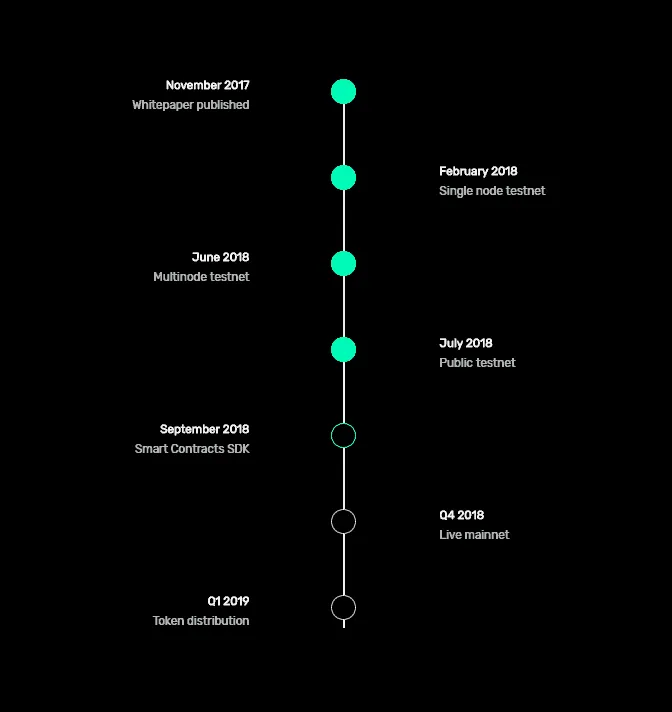
Solana Roadmap works best as a clear sequence: define the constraint, compare the realistic options, test the tradeoff, and choose the path with the fewest hidden costs. That order keeps the advice usable instead of decorative. After each step, pause long enough to check whether the recommendation still fits the reader's actual situation. If it depends on perfect timing, unusual access, or a best-case budget, include a simpler fallback.
Solana 2026 Roadmap: Why SOL is Dominating the AI x DePIN Narrative
Watchouts: Avoid the Weak Options
The AI and DePIN narratives are crowded with projects claiming to solve complex infrastructure problems. Not all of them deliver. When evaluating Solana-based projects in this space, look for concrete utility rather than vague partnerships. Many projects launch with grand promises but lack the technical depth to sustain user growth. Focus on protocols that have active developer communities and real-world data integration. Avoid projects that rely solely on speculation or unproven technology. The market is shifting towards practical applications, and only the robust will survive the coming year.
Solana 2026 trends: what to check next
Analysts see Solana trading between $128 and $1,000 in 2026, depending on how the network handles AI and DePIN adoption. While some forecasts set a conservative floor near $70, others project an average of $445 if momentum holds. The trend remains strong, but price targets vary widely based on market conditions.
Is Solana expected to go up in 2026?
Most forecasts suggest Solana could rise in 2026, with estimates ranging from a low of $70 to a high of $1,000. The 200-day moving average has been sloping upward, indicating strong technical momentum. However, broader market conditions and technological development will determine where SOL actually lands.
Will Solana hit $500?
Reaching $500 is possible but not guaranteed. Some models place the mean prediction near $445, with a ceiling extending to $1,000 in bullish scenarios. Others see a more modest high around $195. Hitting $500 would require sustained growth in network usage and successful integration of AI and DePIN narratives.
How much will Sol be worth in 2027?
Forecasts for 2027 generally show continued growth, with prices ranging between $175 and $377 on average. By 2029, some projections extend this range up to $377.64. The trajectory suggests steady appreciation, though volatility remains a factor.
What will 1 SOL be worth in 2030?
Long-term predictions for 2030 are speculative but point toward significant value increases. Some models suggest SOL could reach $1,000 or more if adoption accelerates. Others remain conservative, estimating values between $500 and $800 depending on regulatory and technological developments.

No comments yet. Be the first to share your thoughts!