
Solana 2026 Price Forecast and Market Data
Solana’s valuation in 2026 is defined by a wide range of analyst projections, reflecting the network’s transition from speculative growth to institutional infrastructure. While current trading data places SOL near $82 with a market capitalization around $48 billion, long-term forecasts suggest significantly higher potential as the network’s 2026 roadmap prioritizes predictable finality and execution integrity.
Analyst consensus for Solana’s 2026 price targets varies sharply, with estimates ranging from $300 to $1,000. A review of nine trusted forecasts indicates a mean prediction near $445, suggesting substantial upside from current levels if adoption accelerates. More conservative models, such as those for September 2026, project a trading range between $41.64 and $139.15, highlighting the volatility inherent in short-term crypto markets.
These price movements are closely tied to Solana’s strategic shift toward becoming the backbone of an Internet Capital Market. As the network focuses on institutional resilience and next-generation onchain finance, its valuation will likely depend less on retail hype and more on the tangible utility provided to financial institutions and developers building on the protocol.
Firedancer and Alpenglow upgrade timeline
Solana’s 2026 roadmap shifts focus from raw speed to institutional-grade reliability. The network is preparing for two major technical catalysts: the Firedancer validator client and the Alpenglow consensus upgrade. These changes aim to resolve historical outages and provide the predictable finality required for large-scale financial applications.
Firedancer, developed by Jump Crypto, introduces a second, independent validator client. This diversification breaks the network’s reliance on a single codebase, significantly reducing the risk of systemic failures. By offering a high-performance alternative to the default client, Firedancer ensures the network can sustain heavy transaction loads without compromising stability.
Alpenglow upgrades the consensus layer to support pipelined parallel execution. This modification allows the network to process transactions more efficiently while maintaining strict ordering guarantees. The combination of these upgrades positions Solana as a robust backbone for onchain finance, targeting the resilience standards expected by traditional financial institutions.
The technical improvements are reflected in market expectations. Analysts project Solana’s value could range between $300 and $1,000 in 2026, with a mean estimate near $445. This optimism stems from the belief that these upgrades will finally eliminate the reliability concerns that have previously capped institutional adoption.
Tracking the upgrades
- Firedancer Mainnet: Expected to launch in early 2026, bringing redundant validator infrastructure.
- Alpenglow Consensus: Scheduled for mid-2026, enabling pipelined parallel execution for higher throughput.
- Institutional Integration: Post-upgrade, Solana aims to serve as the primary settlement layer for tokenized assets.
Solana vs Ethereum L2 throughput comparison
The debate over Solana versus Ethereum Layer 2s (L2s) is no longer just about decentralization; it is a direct comparison of architectural efficiency. Solana’s monolithic design processes transactions on a single global state, while Ethereum’s L2s like Arbitrum, Optimism, and Base batch transactions off-chain before settling on the mainnet. This structural difference creates a stark contrast in throughput, cost, and user experience that defines the 2026 migration thesis.
Solana’s hardware-optimized execution allows it to handle high-frequency trading and real-time applications with minimal friction. Ethereum L2s, while significantly cheaper than the mainnet, still rely on data availability layers and sequencer architectures that can introduce latency or complexity during peak congestion. For consumers and institutional traders, the question is whether the slight decentralization gain of L2s outweighs the seamless speed of a monolithic chain.
The following comparison highlights the core performance metrics that drive this divergence. These figures reflect typical network conditions in early 2026, where Solana’s Firedancer upgrade has further stabilized finality times, and Ethereum L2s have matured their rollup technology.
| Network | Peak TPS | Avg. TX Cost | Finality Time | Architecture |
|---|---|---|---|---|
| Solana | 65,000+ | $0.00025 | < 400ms | Monolithic |
| Arbitrum One | 4,000+ | $0.10 - $0.50 | ~7 days (L1) | Optimistic Rollup |
| Base | 4,000+ | $0.05 - $0.30 | ~7 days (L1) | Optimistic Rollup |
| Optimism | 4,000+ | $0.10 - $0.60 | ~7 days (L1) | Optimistic Rollup |
The data reveals a clear tradeoff. Solana offers institutional-grade speed at near-zero cost, making it ideal for high-frequency finance and consumer apps. Ethereum L2s provide a security guarantee by inheriting Ethereum’s Layer 1 settlement, but this comes with higher costs and longer finality windows due to the challenge period. As the market matures, the choice between these ecosystems will depend on whether speed or security is the primary driver for the application being built.
From speculation to institutional infrastructure
The narrative for Solana in 2026 is shifting away from retail speculation toward institutional utility. The network is positioning itself as the backbone of an "Internet Capital Market," prioritizing predictable finality and execution integrity. This transition is designed to meet the resilience standards required by traditional finance, moving beyond its early reputation for raw speed.
Major financial players are taking notice. Analysts are tracking a potential price range of $300 to $1,000 for SOL in 2026, with a mean estimate near $445. This outlook is supported by shifting stances from traditional finance giants, including Morgan Stanley, which has recently changed its position on Solana's long-term viability.
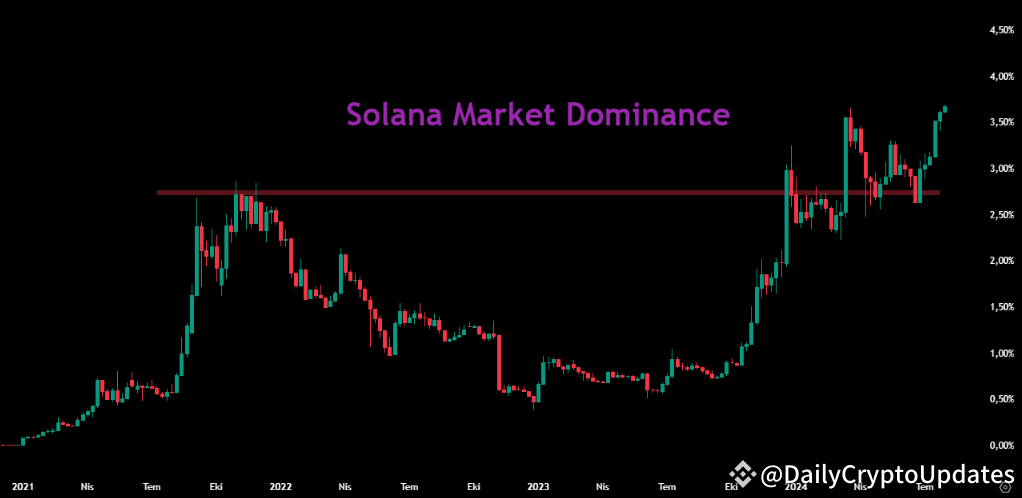
Technical analysis suggests that this institutional adoption could drive sustained growth. The following chart illustrates the current market structure for Solana against Bitcoin, highlighting the asset's performance trends as it matures into a core financial infrastructure layer.
Key risks and challenges for Solana in 2026
Solana’s 2026 roadmap prioritizes predictable finality and institutional resilience, but the network faces distinct technical and market hurdles. While the infrastructure aims to support onchain finance, the path forward requires navigating potential stability issues and intense competition.
Network Stability and Downtime
Despite recent improvements, network outages remain a historical vulnerability. Any recurrence of downtime during peak demand could erode trust among institutional users who require guaranteed uptime. The community remains vigilant, and even minor glitches can trigger significant sell-offs.
Market Volatility and Price Pressure
Solana’s price action remains highly correlated with broader crypto market sentiment. Analysts estimate 2026 values between $300 and $1,000, but this wide range highlights the uncertainty. Sustained growth depends on consistent user adoption rather than speculative hype alone.
Competitive Landscape
Solana competes with other high-throughput blockchains for developer mindshare and liquidity. While its speed advantages are clear, competitors are rapidly closing the gap on finality and cost. Maintaining its market share will require continuous innovation and strong ecosystem incentives.
Solana 2026 FAQ
What is the expected price of Solana in 2026?
Analyst consensus for Solana price prediction 2026 places the asset between $300 and $1,000, with a mean estimate near $445. This projection assumes Solana successfully scales execution throughput while maintaining network stability during high-demand periods.
What is the 2026 plan for Solana?
The 2026 roadmap shifts focus from raw speed to institutional reliability. Key priorities include predictable finality, execution integrity, and resilience, aiming to position Solana as the infrastructure backbone for next-generation onchain finance and capital markets.
Will Firedancer launch in 2026?
Firedancer, the independent validator client developed by Jump Crypto, remains central to the 2026 network upgrade strategy. Its deployment is intended to significantly increase transaction throughput and improve network resilience by providing a robust alternative to the default validator implementation.

No comments yet. Be the first to share your thoughts!