
Solana 2026 price outlook
Solana’s trajectory toward the $1,000 mark in 2026 is no longer a speculative fantasy but a target grounded in institutional analysis and network fundamentals. The consensus among financial analysts places the average price prediction between $300 and $1,000, with a mean estimate hovering near $445 [[src-serp-2]]. This range reflects a cautious optimism that balances Solana’s robust technological upgrades against the inherent volatility of the broader cryptocurrency market.
Institutional perspectives provide a critical anchor for this outlook. Standard Chartered recently adjusted its 2026 price target downward to $250, signaling a more conservative stance on near-term gains. However, the same report highlights a bullish long-term scenario where Solana could reach $2,000 if network adoption accelerates significantly [[src-serp-1]]. This divergence illustrates the high-stakes nature of the prediction: while the base case suggests steady growth, the upside potential remains substantial if key milestones are met.
Further reinforcing this range, market analysts average their 2026 predictions around $500, with the most optimistic estimates reaching $1,200 [[src-serp-7]]. These figures are not arbitrary; they are derived from Solana’s increasing transaction throughput, the successful implementation of Firedancer, and its growing role in DePIN (Decentralized Physical Infrastructure Networks). The path to $1,000 requires Solana to maintain its dominance in speed and cost while navigating regulatory headwinds and competitive pressures from other layer-1 blockchains.
Firedancer and Alpenglow upgrades
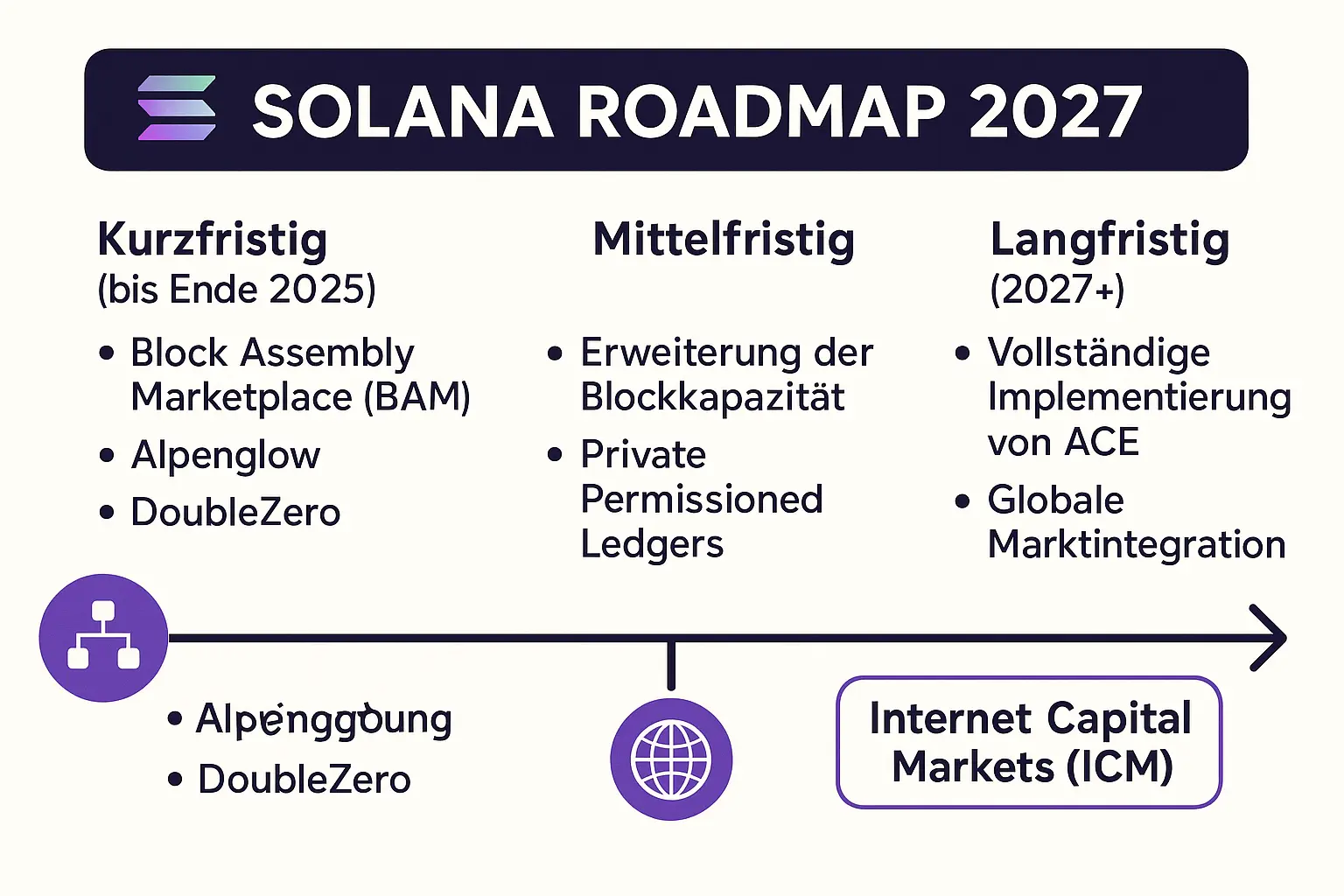
Solana’s path to $1,000 relies heavily on two technical pillars: Firedancer, a new validator client, and Alpenglow, an upgrade to its consensus mechanism. These changes are not just incremental; they are designed to fundamentally alter the network's capacity and reliability. For a network that has historically struggled with outages during high-traffic periods, these upgrades represent the most significant effort to achieve institutional-grade stability.
Firedancer: A Parallel Validator
Firedancer is being built by Jump Crypto, Solana’s largest backer, as a completely independent validator client. Unlike the current client, which is written in Rust and shared by all validators, Firedancer is written in C. This separation is critical. It means that a bug in Firedancer will not crash the entire network, reducing the risk of a single point of failure.
More importantly, Firedancer is designed for parallelism. It allows the network to process transactions simultaneously rather than sequentially. This architectural shift is expected to increase throughput significantly, potentially pushing Solana’s theoretical limit well beyond 1 million transactions per second. For DePIN (Decentralized Physical Infrastructure Networks) and high-frequency trading applications, this raw speed is the primary barrier to entry. Firedancer removes that barrier.
Alpenglow: Faster Finality
While Firedancer handles the volume, Alpenglow addresses the speed of confirmation. Currently, Solana’s consensus mechanism, called Tower BFT, can take several seconds to finalize a block. Alpenglow introduces a new voting mechanism that reduces this finality time to under one second.
This improvement is subtle in daily use but profound for financial applications. In traditional finance, settlement times can take days. In crypto, even seconds matter for arbitrage and high-frequency strategies. Alpenglow brings Solana closer to the instant settlement capabilities of centralized exchanges, without sacrificing decentralization. It also reduces the computational load on validators, making it easier for more participants to run nodes, which strengthens network security.
Network Reliability and Risk
The combination of Firedancer and Alpenglow is Solana’s best defense against the criticism that has plagued it for years: instability. The network has experienced multiple outages, some lasting hours, during periods of extreme congestion. These events have eroded trust among institutional investors who require predictable uptime.
However, the transition is not without risk. Firedancer is still in development, and its mainnet launch date remains subject to change. The team has emphasized that they will not deploy it until it has undergone rigorous testing. This cautious approach is a departure from Solana’s earlier "move fast" philosophy. It signals a maturity in the project’s governance, prioritizing stability over rapid feature deployment.
For investors and developers, the implication is clear. Solana is betting its future on these upgrades. If successful, the network will become the fastest and most reliable layer for high-throughput applications. If they fail or are delayed, the network risks falling behind competitors like Ethereum L2s and other high-performance chains. The $1,000 price target is not just a speculation; it is a reflection of the value that these technical improvements will unlock.
DePIN adoption and network utility
Solana’s transition from a high-throughput blockchain to a foundational layer for Decentralized Physical Infrastructure Networks (DePIN) marks a shift from speculative trading to tangible asset utilization. This evolution is critical because it anchors the network’s value in real-world service delivery rather than purely financial speculation. Projects like Helium, Hivemapper, and Render are not merely tokens; they represent distributed hardware networks that compete with, or complement, traditional centralized infrastructure.
The integration of these physical assets requires robust data verification and low-latency transaction finality, capabilities where Solana’s architecture provides a distinct advantage. By enabling micro-transactions between IoT devices and human users, Solana facilitates economic models that were previously economically unviable due to high gas fees on other chains. This utility creates a sticky user base that relies on the network for daily operational needs, rather than just holding positions for price appreciation.
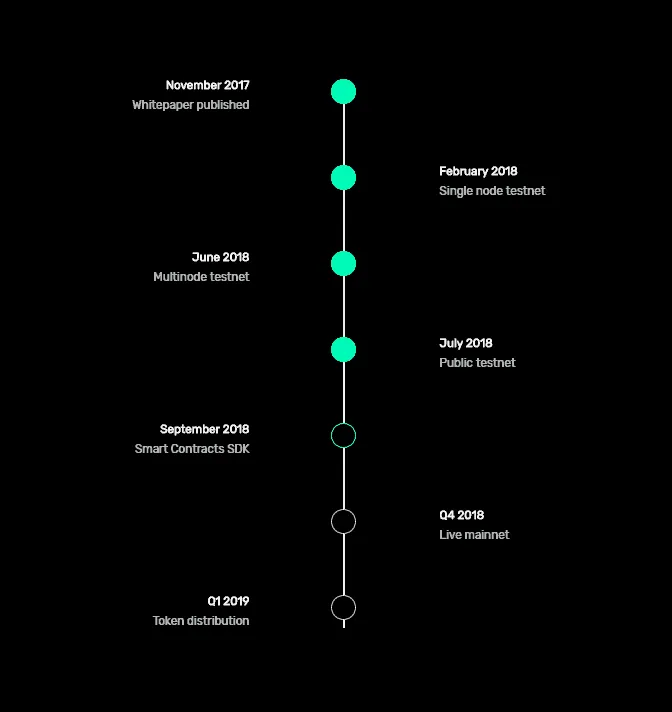
The following image illustrates the broader ecosystem roadmap, highlighting how infrastructure layers support these emerging DePIN applications.
Official analysis from Morgan Stanley has recently noted a changing stance on Solana, citing the growing institutional interest in blockchain infrastructure that supports real-world assets. This institutional validation underscores the market’s recognition that Solana’s utility extends beyond crypto-native trading pairs. As DePIN networks scale, the data generated by these physical devices becomes an economic asset itself, creating a feedback loop that reinforces network security and adoption.
While the potential is significant, the risk remains tied to the successful deployment and maintenance of physical hardware by these projects. However, the move toward DePIN represents a structural maturation of the Solana ecosystem, providing a more resilient foundation for long-term value creation.
2026 Price Targets Compared
Institutional forecasts for Solana in 2026 show significant divergence, reflecting the uncertainty surrounding network scalability and competitive positioning. While some major banks have adjusted their expectations downward, algorithmic models and aggregated analyst consensus remain cautiously optimistic.
Standard Chartered recently revised its 2026 target to $250, citing near-term headwinds, though it maintains a long-term bullish stance with a $2,000 projection for later cycles. In contrast, broader market aggregators like Changelly and independent analyst surveys place the average 2026 price between $356 and $445, with the most aggressive estimates reaching $1,200.
The table below summarizes the primary price targets currently circulating in financial analysis.
| Source | 2026 Target | Range/Context |
|---|---|---|
| Standard Chartered | $250 | Cut from prior high; long-term $2,000 bull case |
| Changelly | $356.91 | Algorithmic average based on historical volatility |
| 9 Analysts (Avg) | $445 | Mean of trusted analyst predictions |
| 247WallSt | $500 | Most realistic cycle peak; max $1,200 |
This variance highlights the critical role of execution. If Solana successfully deploys Firedancer and captures substantial DePIN market share, prices could cluster toward the higher end of these estimates. However, network outages or competitive loss to Ethereum L2s could anchor SOL closer to the $250–$350 range.
Key risks for Solana investors
Solana’s path toward a $1,000 valuation is not guaranteed. The primary obstacle remains regulatory uncertainty. As a high-throughput network, Solana faces intense scrutiny from the SEC regarding its token’s classification. Any adverse enforcement action could severely limit institutional adoption and depress liquidity. Investors must monitor official agency announcements for concrete policy shifts rather than speculative commentary.
Technical execution presents another significant hurdle. Firedancer, the new validator client, promises to double network capacity and improve resilience. However, launching such complex infrastructure carries inherent risks. A failure in Firedancer’s integration could trigger network outages or degrade performance during high-volume periods. The network’s historical stability, while improved, still lags behind some established competitors.
Competition from other Layer 1 blockchains continues to intensify. Ethereum’s ongoing upgrades and the rise of modular architectures offer compelling alternatives for developers. If Solana fails to maintain its developer mindshare or transaction cost advantages, network effects could erode. Market sentiment reflects this uncertainty; prediction markets like Polymarket show mixed confidence in Solana reaching new all-time highs before 2026, with millions traded on outcomes that hinge on these very risks.

No comments yet. Be the first to share your thoughts!