
The 2026 Technical Roadmap
Solana’s 2026 technical roadmap is built to reinforce its position as institutional-grade infrastructure. The network is shifting focus from raw throughput alone to predictable finality, execution integrity, and bandwidth improvements. This pivot supports an Internet-native capital market where reliability matters more than peak speed.
Predictable finality is the cornerstone of this upgrade. Institutions require deterministic settlement times, not probabilistic waits. By tightening consensus mechanisms, Solana reduces the variance in block confirmation, making it viable for high-value financial applications that cannot tolerate uncertainty.
Execution integrity ensures that smart contracts run exactly as written, without front-running or state corruption. Combined with latency improvements and validator client diversity, these changes create a robust foundation for real-world assets (RWAs) and stablecoins. The network is no longer just fast; it is compliant and stable.
This technical evolution directly enables the institutional shift seen in April 2026. As bandwidth scales and client diversity reduces single points of failure, Solana becomes less of a speculative experiment and more of a settlement layer for global finance.
Real-world assets and stablecoin dominance
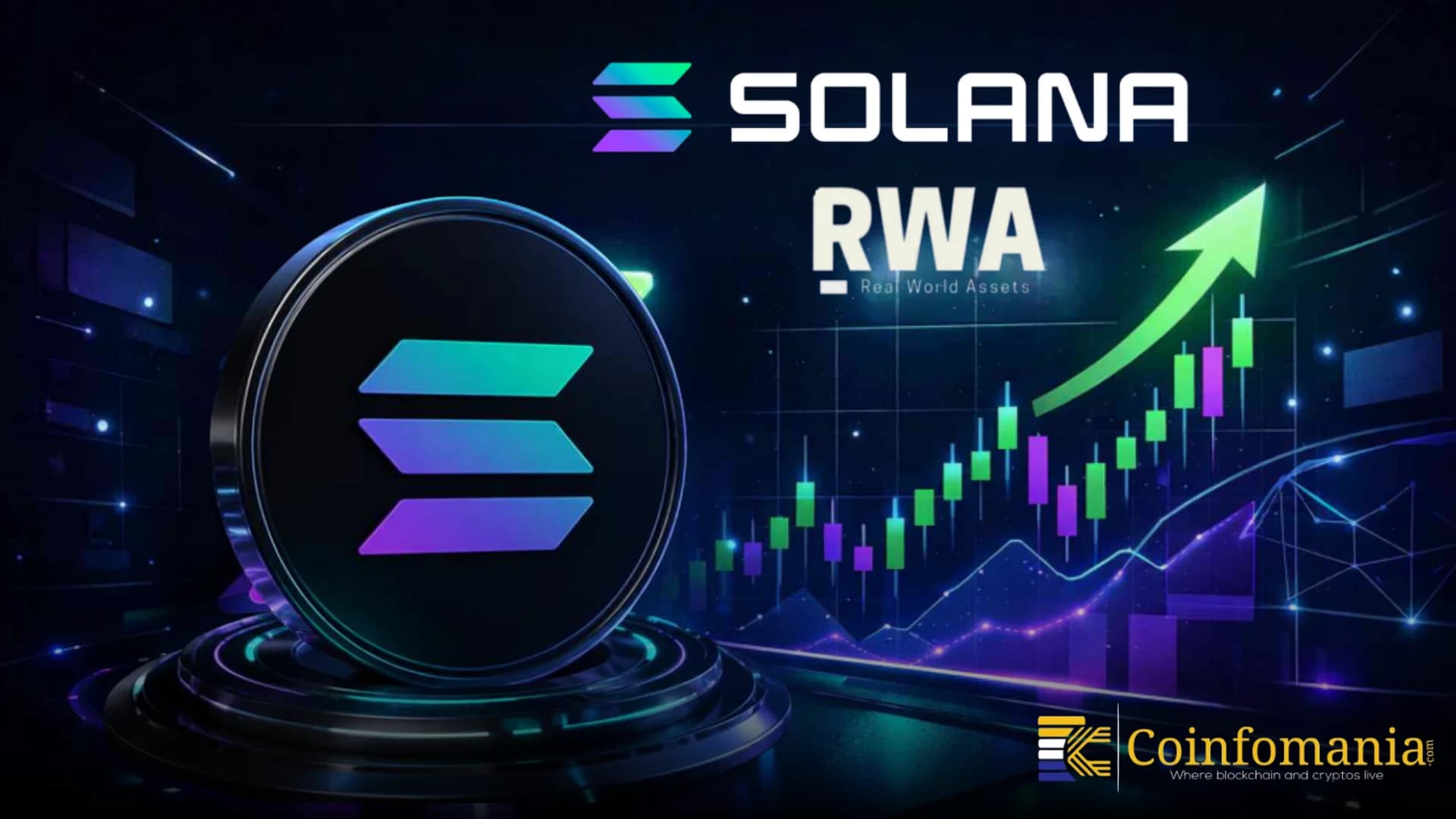
The Solana ecosystem has shifted from experimental DeFi protocols to a settlement layer for institutional capital. In 2026, the network is defined by two converging trends: the tokenization of real-world assets (RWAs) and the integration of traditional finance payment rails via stablecoins.
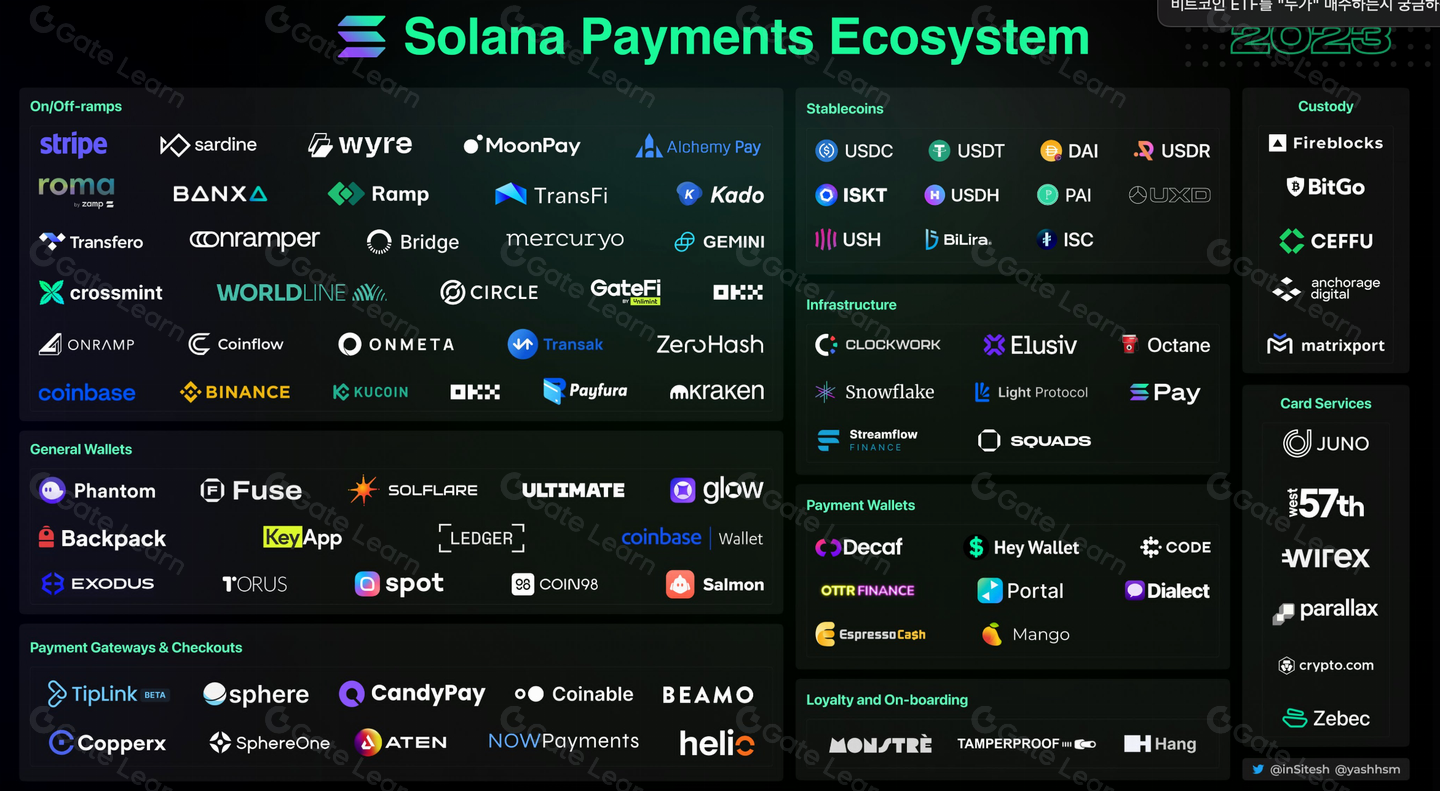
Institutional adoption accelerated when major financial infrastructure providers chose Solana for high-volume, low-latency settlement. Mastercard introduced always-on stablecoin settlement on Solana, allowing merchants to process payments in digital dollars with near-instant finality. This move validated Solana’s capacity to handle enterprise-grade transaction volumes without the congestion issues that plagued earlier blockchain generations. Simultaneously, platforms like Backpack launched tokenized brokerage services, bridging traditional equity markets with on-chain liquidity.
Capital flows reflect this structural shift. Recent data shows over $716 million in RWA capital flowing into the ecosystem, driven by the demand for yield-bearing tokenized treasuries and real estate instruments. These assets provide traditional investors with exposure to blockchain efficiency while maintaining regulatory compliance. The influx is not speculative; it represents the onboarding of existing financial products onto a faster, cheaper network.
Stablecoins serve as the backbone of this activity. As the primary medium of exchange for both retail and institutional users, stablecoin volume on Solana has grown alongside RWA tokenization. The network’s ability to process thousands of transactions per second at fractions of a cent makes it the preferred chain for high-frequency settlement. This utility distinguishes Solana from competitors that rely primarily on speculative trading volume.
The combination of tokenized assets and stablecoin settlement creates a self-reinforcing cycle. RWAs bring long-term capital and regulatory legitimacy, while stablecoins provide the liquidity and speed necessary for daily commerce. Together, they position Solana as critical infrastructure for the next generation of internet-native capital markets.
Solana DeFi liquidity and trading infrastructure
Solana has evolved from a high-throughput experiment into a serious competitor for decentralized trading volume. While Ethereum L2s dominate in total value locked (TVL) for long-term yield strategies, Solana’s architecture—specifically its parallel execution and low latency—makes it the preferred layer for high-frequency trading and liquidity aggregation.
The primary driver of this migration is the user experience gap. On Ethereum L2s, trading often involves bridging assets and waiting for block confirmations that can take seconds or minutes. On Solana, a trade executes in under 400 milliseconds with fees that are fractions of a cent. This speed transforms DeFi from a passive investment vehicle into an active trading infrastructure.
Two protocols anchor this ecosystem: Jupiter and Raydium. Jupiter acts as the universal aggregator, scanning dozens of liquidity sources to find the best price for a swap. Raydium provides the on-chain liquidity itself, functioning as an automated market maker (AMM) that integrates closely with Jupiter. Together, they create a flywheel: deep liquidity attracts traders, and high trading volume attracts more liquidity providers.
The following comparison highlights the structural differences between Solana’s native DeFi layer and Ethereum’s L2 ecosystem. The data illustrates why institutional traders and high-volume retail users are increasingly routing their activity through Solana.
| Metric | Solana | Ethereum L2s (Avg) |
|---|---|---|
| Avg. Swap Fee | $0.02 | $0.50–$2.00 |
| Transaction Finality | < 400ms | 1–10 seconds |
| Primary Use Case | High-frequency trading & swaps | Yield farming & long-term holds |
| Top Aggregator | Jupiter | 1inch / UniswapX |
| Liquidity Fragmentation | Low (Unified liquidity) | High (Fragmented across L2s) |
This infrastructure shift is not just about speed; it is about capital efficiency. On Ethereum, liquidity is often trapped in isolated pools or locked in complex yield strategies. On Solana, the unified liquidity model allows capital to be deployed instantly across multiple markets. This efficiency is critical for institutional players who require predictable execution without the slippage risks associated with fragmented order books.
As the ecosystem matures, the focus is shifting from simple swaps to more complex financial instruments. Perpetual futures, options, and real-world asset (RWA) tokenization are beginning to leverage Solana’s throughput. The foundation laid by Jupiter and Raydium provides the necessary plumbing for these advanced products to scale without the network congestion that has historically plagued Ethereum during peak demand.
From Speculation to Utility: The New Solana NFT Landscape
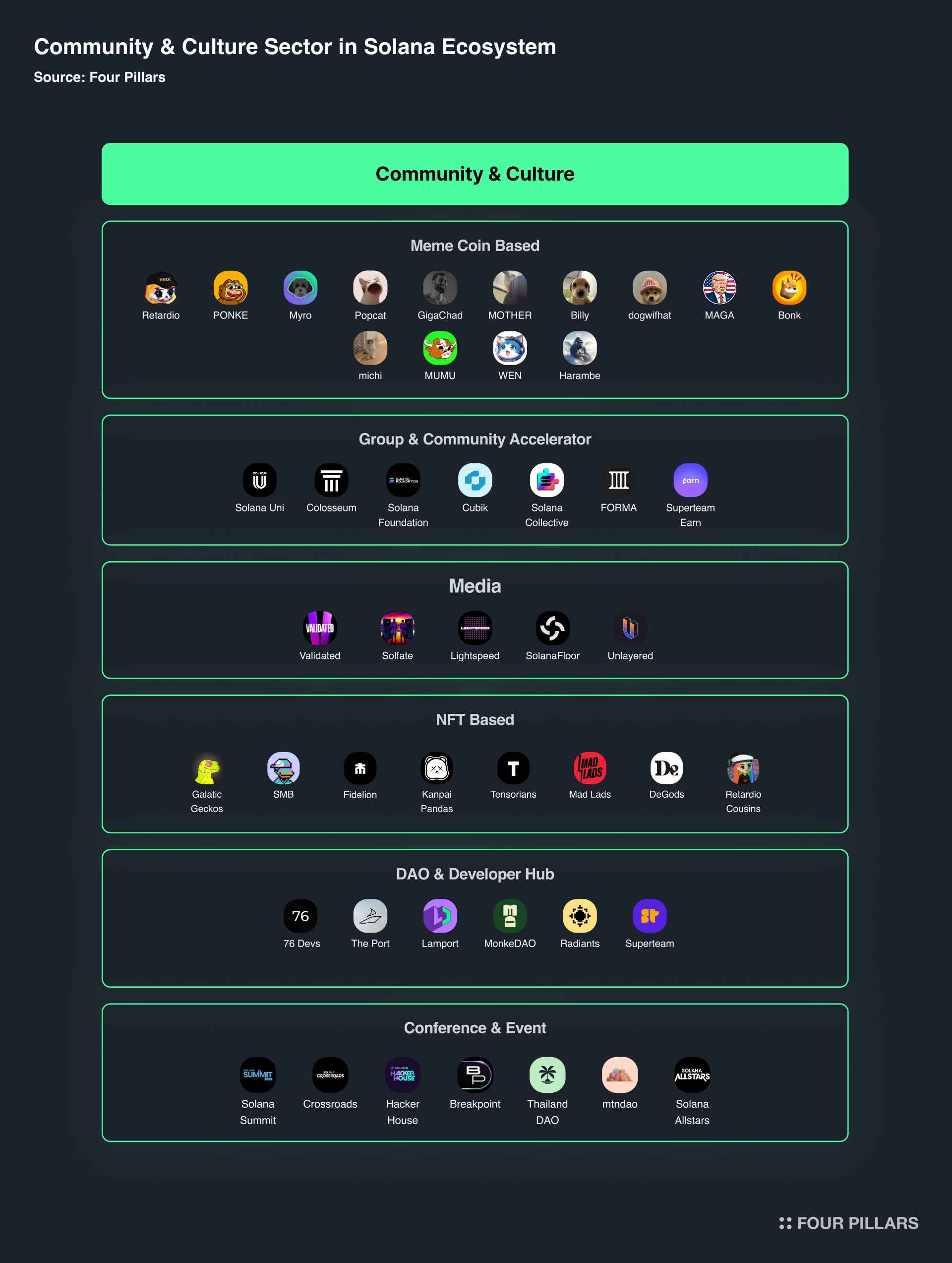
The Solana NFT ecosystem has fundamentally shifted from a speculative art market to a utility-driven infrastructure. In 2026, digital collectibles are no longer just static images; they are functional assets integrated into DeFi, gaming, and consumer applications. This transition mirrors the broader institutional shift on Solana, where verifiable ownership and low-latency transactions enable real-world use cases.
The primary driver of this change is the integration of NFTs with Solana’s financial primitives. Projects are now leveraging token-gated access, loyalty programs, and fractionalized ownership to create lasting value. Unlike the 2021 boom, which was driven by hype, the current growth is sustained by actual user engagement and interoperable standards like Metaplex’s latest upgrades. These standards allow for more complex metadata and dynamic NFTs that evolve based on on-chain activity.
Consumer applications are expanding rapidly, particularly in ticketing and identity verification. Major events and brands are using Solana for its speed and low fees, enabling seamless transfers and secondary market trading without the friction of Ethereum gas spikes. This utility is attracting a broader audience beyond crypto-native traders, positioning Solana as a leading chain for mainstream digital assets.
SOL price prediction and market outlook
Solana’s price trajectory in 2026 is anchored by its transition from a high-throughput retail chain to institutional-grade infrastructure. The network’s technical roadmap prioritizes predictable finality, execution integrity, and reduced latency, addressing the reliability concerns that previously capped broader financial adoption. As validator client diversity expands and bandwidth improves, Solana is positioning itself as the settlement layer for tokenized real-world assets (RWAs) and high-frequency trading applications.
Institutional capital is increasingly viewing SOL not just as a speculative asset, but as a proxy for blockchain utility. The acceleration of ecosystem tokens and the integration of traditional finance rails suggest a structural shift in demand. This institutional adoption creates a floor for SOL’s valuation, decoupling it from pure retail speculation and tying its growth to measurable network usage and total value locked (TVL) expansion.
Market analysts project that SOL’s price potential is closely tied to the success of its RWA integrations and the stability of its consensus mechanism. While volatility remains inherent to crypto markets, the decreasing correlation with broader risk-off sentiment in recent quarters indicates growing market maturity. Sustained growth will likely depend on Solana’s ability to maintain uptime during peak congestion and secure partnerships with major financial institutions for tokenized securities.
Key takeaways for investors
Evaluating Solana ecosystem opportunities requires separating narrative hype from institutional-grade fundamentals. The 2026 roadmap prioritizes predictable finality, execution integrity, and bandwidth improvements, shifting the focus from raw speed to reliability. This transition supports Solana's evolution into infrastructure for Internet-native capital markets.

Check if the project leverages Solana’s 2026 roadmap features like predictable finality and validator client diversity. Infrastructure that supports institutional-grade reliability is better positioned for sustained growth than speculative tokens relying solely on low fees.
Look for projects actively integrating real-world assets (RWAs) or deep liquidity pools within decentralized finance. The ecosystem’s 2026 growth is heavily tied to institutional adoption of tokenized assets and robust DeFi yields, not just retail speculation.
Examine the token’s utility and governance structure. Sustainable projects align token incentives with network health and long-term development, ensuring that value accrues to holders rather than being diluted by excessive emissions.
Monitor the Solana price action alongside these fundamental checks. A strong technical chart confirms market sentiment, but the underlying project’s alignment with institutional standards remains the primary driver of long-term value.
What is the 2026 plan for Solana?
Solana’s 2026 technical roadmap focuses on transitioning from high-throughput experimentation to institutional-grade reliability. The core strategy prioritizes predictable finality, execution integrity, and reduced latency to support Internet-native capital markets.
Key technical pillars include:
- Predictable Finality: Reducing variance in block times to ensure consistent settlement times for institutional users.
- Execution Integrity: Enhancing the validator client diversity to prevent single points of failure and improve network resilience.
- Bandwidth & Latency: Upgrading networking infrastructure to handle increased transaction volumes without congestion.
These upgrades are designed to make Solana a robust backend for traditional finance applications, moving beyond speculative trading into stable, high-value transactions.

No comments yet. Be the first to share your thoughts!